
- Offerings
- Tools & Platforms
Tools & Calculators
- Open API
- Calculators
- SIP Calculator
- CAGR Calculator
- Compound Interest Calculator
- FD Calculator
- RD Calculator
- EPF Calculator
- Retirement Calculator
- HDFC SIP Calculator
- Mutual Fund Return Calculator
- Lumpsum Calculator
- Step Up SIP Calculator
- ETF SIP Calculator
- Brokerage Calculator
- Equity Margin Calculator
- SWP Calculator
- EMI Calculator
- MTF Calculator
- Pricing
- SKY Learn
- Mutual Funds
- Margin Trading
- Financial Planning
- Personal Finance
- Share Trading
- IPO
- Derivatives
- Currencies
- Intraday Trading
- Trading Strategies
- Demat Account
- Commodity
- ETF
Commodity Trading Strategies for Beginners: A Step-by-Step Guide
By Shishta Dutta | Updated at: May 16, 2025 04:22 PM IST

Trading in investment instruments can sometimes become highly risky if you are not aware of certain strategies. Seasoned traders use Commodity Trading Strategies to:
- Hedge against market volatility, reduce their net losses, and consistently build wealth over time.
When it comes to trading in commodities like crude oil, agricultural commodities, and precious metals like gold, here are some strategies that can help investors reduce the risk.
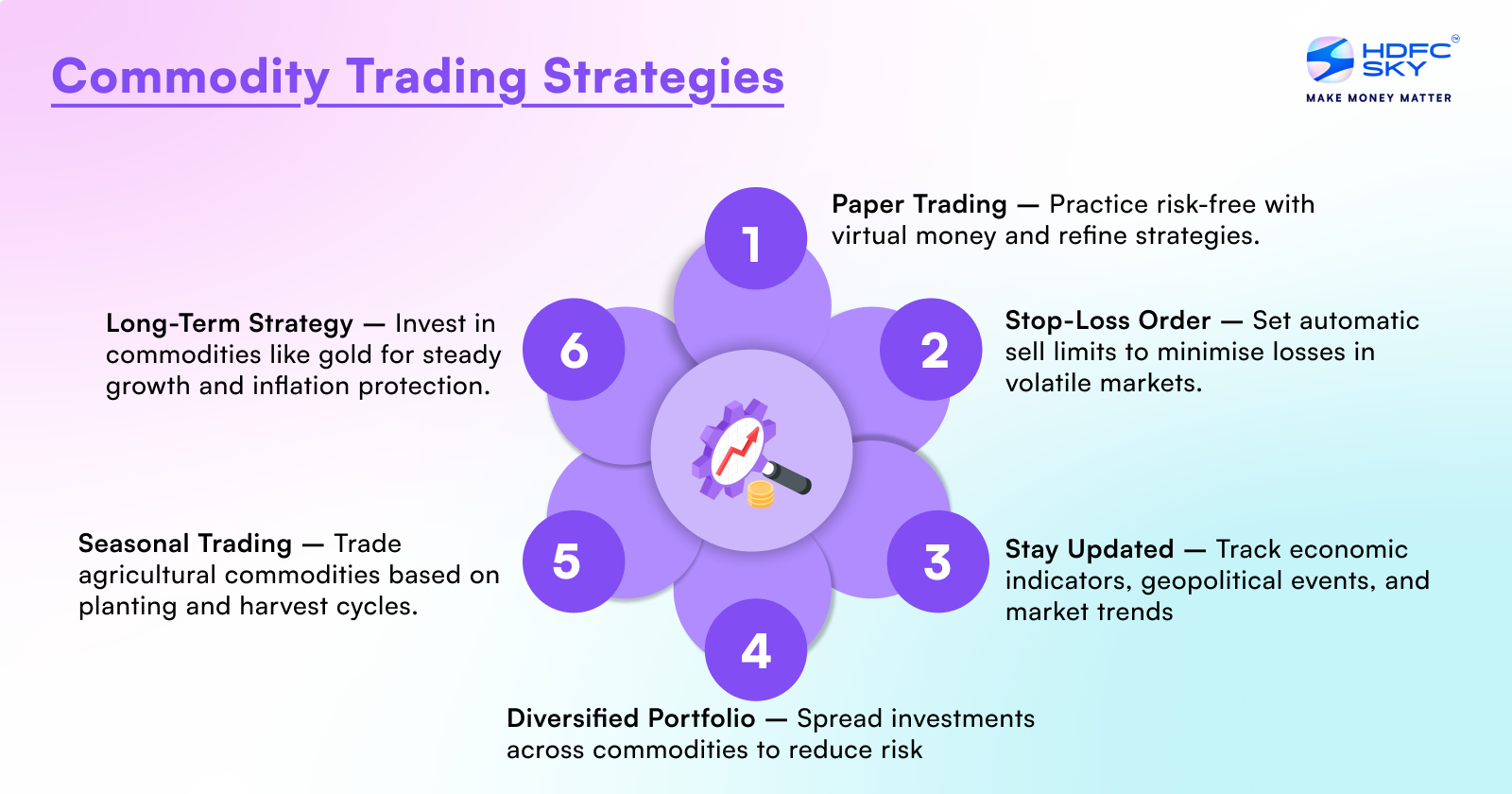
1. Start with Paper Trading
One of the safest strategies that beginners can use in commodities trading is known as Paper Trading. This is a type of simulated trading where you can use a demo account to practice commodity trading. This means you do not need to invest your money in paper trading. There are many online trading platforms that offer this facility.
Below are some advantages of paper trading if you are a beginner in commodity trading.
| Advantages | Explanation |
| No financial risk | Practice in simulated trades with virtual money. |
| Develop and refine strategies. | Easily test and refine investment techniques. |
| Real-time experience | Develop familiarity with market movements. |
2. Use a Stop-Loss Order
Once you are confident that you are ready to trade in the real market, you can begin by implementing stop-loss orders in the commodities market. A stop-loss order is a feature that most online trading platforms have.
This feature automatically sells your position in a futures/options contract when it reaches its predetermined price. This can help you prevent losses in a volatile market.
For example, if you have purchased a futures contract gold at a strike price of ₹4,500, then you can set a stop-loss order to automatically sell this position when the price reaches ₹4,500.
3. Stay Updated with Market News
This is one of the most overlooked strategies and beginner investors often look for ways around it because of its cumbersome nature. Keeping regular track of market news and developments in the commodities market can be time consuming and even boring for some investors.
However, staying updated on the latest news about economic indicators, geopolitical events, and market trends is a great way to predict price movements in the commodities market.
Here is a short summary on the same:
| Indicators | Explanation |
| Economic indicators | GDP, inflation, and interest rates |
| Geopolitical events | Wars, trade agreements, sanctions |
| Market trends | Seasonal demand and global market shifts |
4. Consider a Long-Term Strategy
Entering the commodities market and investing for a long period is a tried and tested strategy that all beginners should do. Whether it is gold or oil, assets in the commodities market have demonstrated consistent long-term growth.
One way to capitalise on this strategy is to choose a trusted online trading platform like HDFC Sky wherein you can avail of the advantages of a long-term strategy.
| Advantages | Explanation |
| Consistent appreciation | Commodities like gold usually appreciate over time. |
| Hedge against inflation | Consistent appreciation makes them good hedging instruments. |
| Lower transaction costs | Long-term holdings often lead to lower transaction costs. |
5. Seasonal Trading Strategy
If you are keen on trading in agricultural commodities, then you can use the seasonal trading strategy. In fact, this strategy is best deployed when there are price movements between planting and harvest seasons.
For example, if you acquaint yourself with the cycles of wheat production, you can anticipate the price movements of this agricultural commodity and profit from it.
However, before using this strategy, you should know that during harvest seasons, prices of agricultural commodities tend to fall because of more supply than demand. Whereas, in the planting season, the prices may increase.
6. Develop a Diversified Portfolio
Finally, having a diversified investment portfolio can help you further mitigate risks. When you have a diversified commodity trading portfolio, you essentially spread your risks across multiple commodities. This spreads out the negative impacts of unfavourable price movements.
For example, if you may have invested in both crude oil and gold. If the price of oil falls while that of gold rises, then the latter can compensate for any losses you have in the former.
Conclusion
When trading in commodities, it is necessary to use some of these strategies if you are just starting out. To further reduce your risks and grow your profits from commodities trading, you can use a blend of any of these strategies.
Related Articles
FAQs on Commodity Trading Strategies for Beginners
What are some common commodities for beginners to trade?
Some of them include gold, crude oil, and agricultural products like wheat, rice, and corn.
How can beginners manage risk effectively in commodity trading?
As a beginner, you can use stop-loss orders to effectively reduce your risk of losses in commodity trading.
Is commodity trading suitable for everyone?
Yes, anyone who clearly understands their risk appetite and implements proven strategies can trade in the commodity market.




