- Offerings
- Tools & Platforms
Tools & Calculators
- Open API
- Calculators
- SIP Calculator
- CAGR Calculator
- Compound Interest Calculator
- FD Calculator
- RD Calculator
- EPF Calculator
- Retirement Calculator
- HDFC SIP Calculator
- Mutual Fund Return Calculator
- Lumpsum Calculator
- Step Up SIP Calculator
- ETF SIP Calculator
- Brokerage Calculator
- Equity Margin Calculator
- SWP Calculator
- EMI Calculator
- MTF Calculator
- Pricing
- SKY Learn
- Mutual Funds
- Margin Trading
- Financial Planning
- Personal Finance
- Share Trading
- IPO
- Derivatives
- Currencies
- Intraday Trading
- Trading Strategies
- Demat Account
- Commodity
- ETF
Difference Between Gold ETF vs Physical Gold
By HDFC SKY | Updated at: Jul 24, 2025 05:40 PM IST
Summary
- Liquidity Advantage: Gold ETFs offer higher liquidity and ease of trading through stock exchanges, unlike physical gold which can be cumbersome to sell or convert.
- Purity and Safety: ETFs ensure 99.5% pure gold backing and eliminate concerns of theft, storage, or impurities associated with physical gold.
- Cost Efficiency: Physical gold incurs making charges, storage costs, and risk premiums, whereas ETFs have lower expense ratios and no need for safekeeping.
- Taxation Benefits: Gold ETFs enjoy more favorable tax treatment, including indexation benefits on long-term capital gains, unlike physical gold which may attract higher taxes.
- Investment Convenience: ETFs allow fractional investment, digital access, and no concerns of physical delivery, while physical gold requires substantial upfront investment and logistical care.
- Use Case Consideration: Physical gold is preferred for traditional purposes like weddings and gifting, while ETFs are ideal for portfolio diversification and long-term financial goals.
- Overall Recommendation: For investors seeking safety, liquidity, and returns, Gold ETFs present a more modern, secure, and cost-effective alternative to physical gold.
The shine of gold, a timeless asset, has attracted people since time immemorial. It has an emotional value and is seen as a safe haven during inflation. While earlier, people mostly invested in it in its physical form, such as jewellery, coins, bars, etc., today there are alternate ways to hold it. Gold exchange-traded funds (ETFs) are another way to invest in it.
Though physical gold and gold ETFs allow investment in gold, they differ significantly in terms of ownership, cost, and convenience. This blog captures gold ETF vs physical gold differences that can help you make an informed choice.
What are Gold ETFs?
Before discussing the differences between etf gold vs physical gold, let’s understand what gold ETFs are? A gold ETF is an exchange-traded fund investing in gold bullions according to current gold prices. A passive investment, one unit of a gold ETF represents one gram of gold. Traded on stock exchanges, you can buy or sell gold ETFs like individual stocks and shares.
Gold ETFs allow you to purchase gold in an electronic format. They represent 99.5% pure physical gold bars, and you can buy or sell them through a stock broker. You need a demat and trading account to invest in gold ETFs. Being listed on stock exchanges, you can buy or sell them at the same price throughout India. When redeemed, you don’t get physical gold but cash equivalent.
What is Physical Gold Investment?
As the name suggests, physical gold investment refers to investing in gold in its physical form. It could be in the form of jewellery, coins, or bars. You own the metal in physical gold and can buy it from jewellers across India. Physical gold investment can be for consumption or cultural purposes such as weddings, gifting, etc.
Unlike gold ETFs, physical gold investment doesn’t require a demat or trading account. You can buy any jeweller of your choice. When you buy physical gold, you need to pay the making charges and goods and services (GST) tax on top of the prevailing gold price as the final amount. Universally accepted, you can sell physical gold in an emergency and get cash.
Differences Between Gold ETF and Physical Gold
The table captures the differences between gold ETF vs physical gold on various parameters:
| Aspect | Gold ETF | Physical Gold |
| Form | Gold ETFs are digital, where you own gold but not tangibly. | Physical gold is in physical form, which makes it a tangible asset. |
| Storage | You hold gold ETFs in a dematerialised format in your Demat account. | You may need to store physical gold in your home’s or bank’s locker. |
| Purity | Gold ETFs are highly pure as they represent 99.5% of physical gold bars. | The purity of physical gold may vary across jewellers, and there are chances of some impurities creeping in. |
| Making Charges | Gold ETFs don’t require any making charges. | Physical gold can have medium to high making charges. |
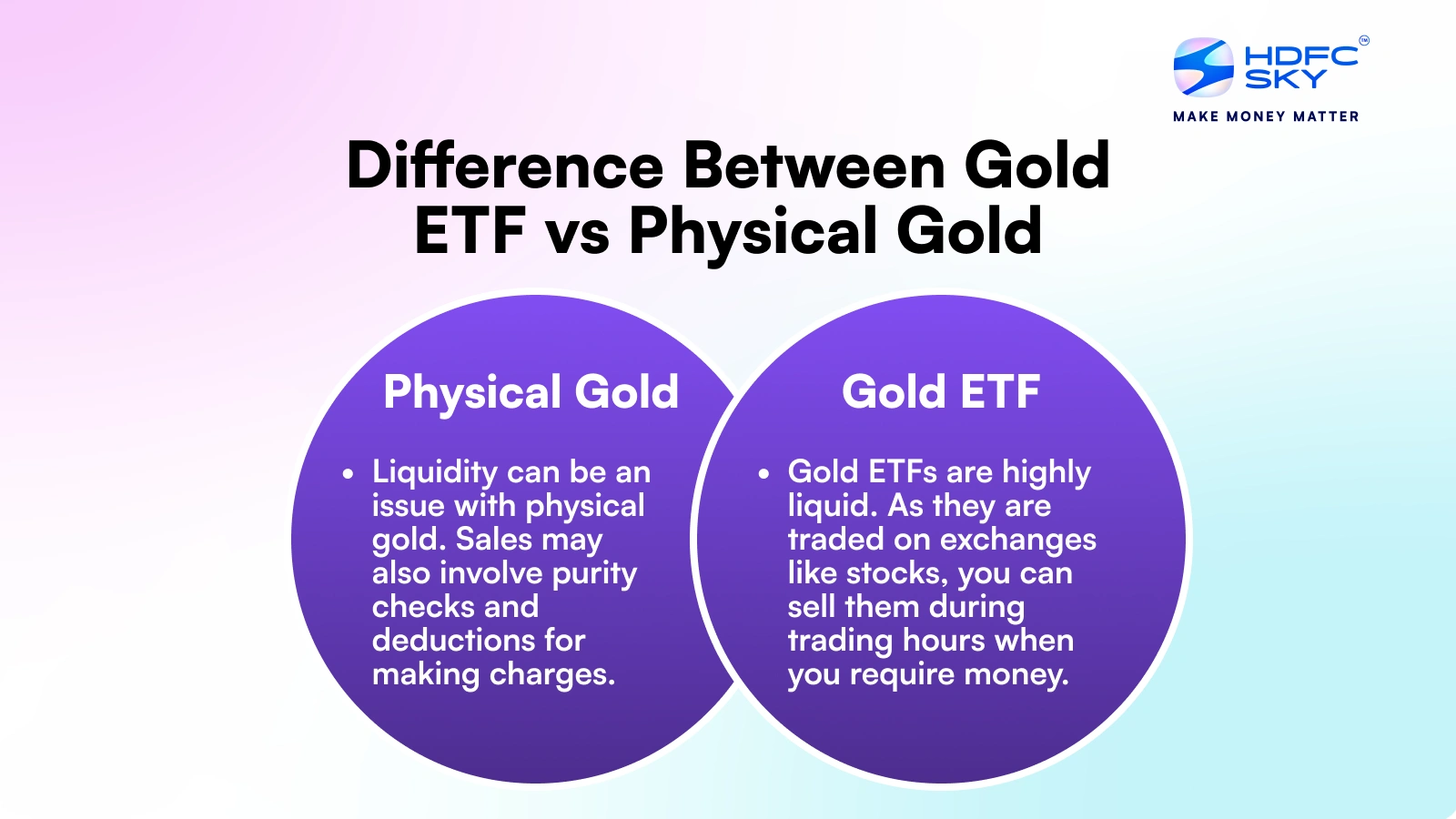
| Liquidity | Gold ETFs are highly liquid. As they are traded on exchanges like stocks, you can sell them during trading hours when you require money. | Liquidity can be an issue with physical gold. Sales may also involve purity checks and deductions for making charges. |
| Safety | Gold ETFs are held in a dematerialised form, making them highly secure and less prone to theft. | As physical gold is a tangible asset, there are high chances of theft. |
| Investment Cost | Investing in gold ETFs requires paying an expense ratio charged by the fund house and a brokerage fee. | Physical gold investment requires paying the making charges, storage fees of bank lockers, etc. |
| GST Application | You don’t need to pay any GST when buying gold ETFs. | You need to pay GST when buying physical gold. |
Physical Gold Vs Gold ETF: Which is Better?
Now that you know the differences between gold ETF vs physical gold, you must be thinking if you should invest in gold ETF or physical gold. The choice between physical gold or gold ETF requires a few considerations, including:
-
The Kind of Possession You Want
Investing in physical gold vs gold ETF depends significantly on the kind of possession you want for gold. You can choose gold ETFs if you want to own gold digitally. On the other hand, if you want it as a tangible asset, you can invest in its physical form.
-
Market Knowledge
It’s another consideration before choosing between physical gold vs gold ETF. Investing in gold ETFs requires knowledge about markets and trading. If you’ve got that knowledge, you can opt for gold ETFs. On the other hand, if you lack it, you can opt for physical gold.
-
Returns
The choice between gold ETF investment vs physical investment also depends on returns. While the 10-year compound annual growth rate (CAGR) of physical gold (from Dec 24, 2014 to Dec 24, 2024) stood at approximately 12%, the same for well-performing ETFs stood at 10.02% to 10.28%. There isn’t much difference between gold ETF vs physical gold returns.
The answer to the question whether gold etf better than physical gold or is it better to buy physical gold or ETF isn’t fixed. It doesn’t follow a one-size-fits-all approach and varies across individuals.
Conclusion
Gold ETFs and physical gold allow you to own gold, albeit differently. While the former lets you invest in the yellow metal digitally, the latter allows physical ownership. Both have pros and cons. Your choice depends on your investment preference and strategy. You can choose the one that you feel most comfortable with.
Related Articles
FAQs on Difference Between Gold ETFs vs Physical Gold
Why are gold ETF prices different from physical gold?
Several factors contribute to the difference in gold ETF prices compared to physical gold. These include liquidity, market demand, and the expense ratio of the former. As gold ETFs are traded on exchanges, their prices can fluctuate due to supply and demand fluctuations.
Should I buy gold ETF?
You can buy a gold ETF if you want to own gold digitally. If you have the required market knowledge and know the nitty-gritty of trading, you can purchase gold ETFs by having a Demat and trading account with a registered stockbroker.
Is investing in Gold ETFs safer than buying physical gold?
Unlike physical gold, which you may need to store in lockers, gold ETFs are in dematerialised format. It makes them less prone to theft. However, as they are traded like stocks, they are prone to the same market risks, including volatility and mismatch in demand and supply
How do liquidity and transaction costs compare between Gold ETFs and physical gold?
Gold ETFs generally have higher liquidity as you can purchase or sell them on stock exchanges. On the other hand, you need to find a buyer or seller for physical gold, which can be time-consuming. Transaction costs for gold ETFs are limited to expense ratios and brokerage fees, while physical gold involves making charges and storage costs.
Can I convert my Gold ETF shares into physical gold?
Yes, you can do so. You can request the redemption process from the fund house. Then, pay the difference in value between the gold and the ETF units. The fund house will then issue a delivery order, after which you can pick up physical gold. However, you need to check with the fund house if such a conversion is possible.
Is gold ETF better than physical gold?
Gold ETFs and physical gold have their pros and cons. While gold ETFs allow you to invest in gold digitally and are less prone to thefts, you need a solid understanding of markets and trading before investment.