- Offerings
- Tools & Platforms
Tools & Calculators
- Open API
- Calculators
- SIP Calculator
- CAGR Calculator
- Compound Interest Calculator
- FD Calculator
- RD Calculator
- EPF Calculator
- Retirement Calculator
- HDFC SIP Calculator
- Mutual Fund Return Calculator
- Lumpsum Calculator
- Step Up SIP Calculator
- ETF SIP Calculator
- Brokerage Calculator
- Equity Margin Calculator
- SWP Calculator
- EMI Calculator
- MTF Calculator
- Pricing
- SKY Learn
- Mutual Funds
- Margin Trading
- Financial Planning
- Personal Finance
- Share Trading
- IPO
- Derivatives
- Currencies
- Intraday Trading
- Trading Strategies
- Demat Account
- Commodity
- ETF
How to Learn Share Market?
By HDFC SKY | Updated at: Apr 24, 2025 04:58 PM IST

The share market is much simpler than it might appear on financial news channels.
In this article, we will learn stock market basics. Whether you’re a student, a working professional, or someone curious about how to invest in the share market, we’ll explain everything from understanding what stocks are to learning- how to make your first investment; this article covers all the essential steps.
What is the Share Market?
Imagine Share market as a central platform where investors buy and sell shares of Publicly listed companies
In India, the Bombay Stock Exchange (BSE) and the National Stock Exchange (NSE) are the two main stock exchanges. For example, if company X is listed on the BSE, investors can buy its shares to own a part of the company.
What is Trading and Investing in the Share Market?
Understanding the difference between trading and investing helps build a clear foundation of the share market basics. These two approaches represent distinct ways of participating in the market, each with its own characteristics and requirements.
- Trading: Buying and selling shares frequently to profit from short-term price changes.
- Investing: Buying shares to hold them for a longer period, aiming for growth and dividends.
| Aspect | Trading | Investing |
| Time Horizon | Short-term (minutes to days) | Long-term (months, years to decades) |
| Primary Goal | Quick profits from price movements | Wealth building through company growth |
| Decision Basis | Price, patterns, market sentiment, charts | Company fundamentals, business growth, industry trends |
| Frequency | Multiple trades per day/week | Few transactions per year |
| Returns Source | Price differences between buy and sell | Dividends and long-term capital appreciation |
| Risk Level | Generally higher due to frequent trading | Typically moderate with proper diversification |
| Time Investment | Requires constant market monitoring | Periodic review of investments |
| Cost Factors | Higher due to frequent transaction charges | Lower due to fewer transactions |
How Do Investors Make Money?
Investors earn money in two main ways:
- Price Increases (Capital Gains): Buying shares at a low price and selling them at a higher price. For example, if you buy a share at ₹100 and sell it at ₹150, you make ₹50 per share.
- Dividends: Some companies share their profits with shareholders through dividends. For instance, if a company pays ₹5 per share annually, that’s extra income for you.
What Affects Stock Prices?
Prices in the stock market reflect:
Facts:
- Company Performance: Positive earnings reports, revenue growth, or new product launches often drive stock prices up, while losses or declining revenue pull them down.
Example: A company reporting record quarterly profits may see its stock price surge. - Economic Indicators: Inflation, interest rates, and GDP growth impact stock prices. For instance, lower interest rates often make equity investments more attractive.
Example: A rise in GDP signals economic growth, which can boost stock prices across sectors. - Industry Trends: Shifts in demand or technological advancements in an industry can directly affect company stock prices.
Example: Increased demand for electric vehicles may boost the stock prices of EV manufacturers and related industries. - Regulatory Changes: New government policies or regulatory updates can influence specific industries.
Example: A tax cut for renewable energy companies can drive up their stock prices. - Global Events: Geopolitical events, trade agreements, or supply chain disruptions significantly impact markets.
Emotions:
- Investor Sentiment: Optimism or fear among investors can drive markets up or down, even without significant news. For example, hype around a company’s new product may inflate its stock price despite the lack of proven success.
- Media Influence: Positive or negative media coverage can shape public perception and influence stock prices. A viral news report about a company’s innovation can lead to a sudden spike in its stock price.
- Herd Behavior: Investors tend to follow market trends, buying during rallies and selling during downturns, amplifying price movements. A market correction might trigger panic selling, further driving prices down.
- Fear of Missing Out (FOMO): When stock prices rise quickly, investors often rush to buy, inflating prices even further. A sudden rise in a tech stock can lead to a buying frenzy, causing overvaluation.
How to Start Learning Trading in Stock Market
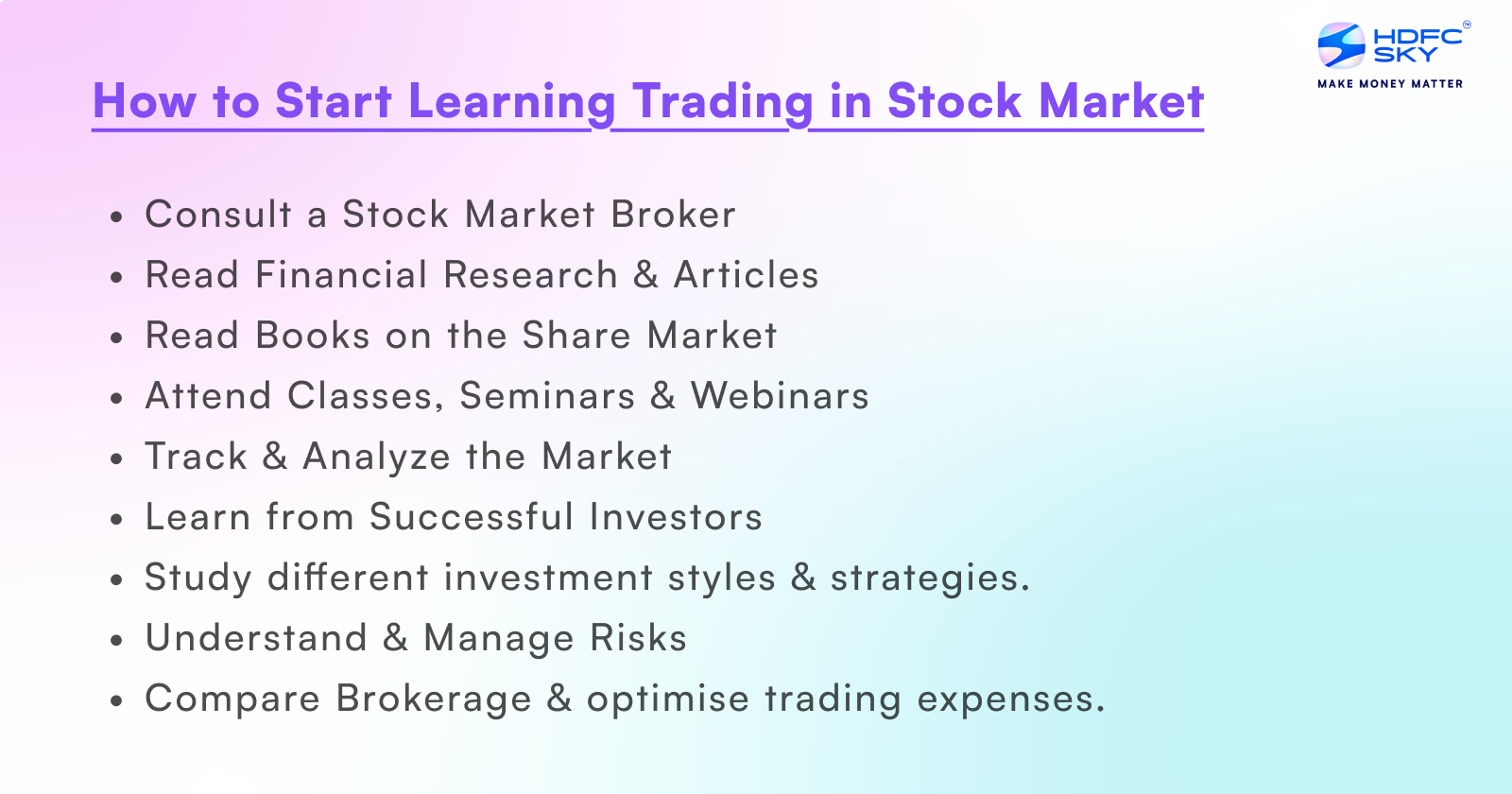
If you want to learn about investing in share markets as a beginner, you need to understand the basics first.
Consult a Stock Market Broker
Understanding the share market begins with finding the right guidance. A stockbroker serves as your first point of contact with the market, helping you understand its basic operations and mechanics. Think of them as your initial teacher in the market – they explain how to open necessary accounts, place your first trades, and understand basic market operations. Your broker will help you set up a Demat account, which works like a digital storage space for your shares, and explain different types of trading accounts that suit various investment goals.
Beyond just executing trades, a good broker provides valuable insights about market functioning. They explain crucial concepts like the difference between delivery trading (holding shares for longer periods) and intraday trading (same-day buying and selling). This knowledge helps you make informed decisions as you begin your market journey.
Read Financial Research and Articles
Building market knowledge requires consistent learning through reliable sources. Regular reading of financial news and analysis helps you understand how various factors affect share prices. Start with basic financial newspapers that explain market movements in simple terms. As your understanding grows, gradually move to more detailed market analysis and research reports.
This daily reading habit helps you connect the dots between various market events. For instance, you’ll begin to understand how company performances, industry trends, and economic news influence share prices. Reading analysis from different sources also helps you develop a well-rounded perspective on market movements.
Read Books on the Share Market
Books offer structured, comprehensive knowledge about market fundamentals. Unlike daily news that focuses on current events, books provide timeless principles and tested strategies. Begin with introductory books that explain basic concepts like share valuation, market cycles, and investment principles. These books often include practical examples that help you understand how theoretical concepts apply in real market situations.
Attend Classes, Seminars, and Webinars
Learning from experienced market professionals provides invaluable practical knowledge. These educational sessions offer structured learning environments where you can understand complex market concepts broken down into digestible parts. Professional instructors often share real-world examples, helping you understand how theoretical knowledge applies to actual market situations.
These learning forums also provide opportunities to interact with other learners and experts. You can ask questions, discuss market scenarios, and learn from others’ experiences. Many sessions cover practical aspects like reading market indicators, understanding price patterns, and implementing risk management strategies. The interactive nature of these sessions helps clarify doubts and provides deeper insights into market mechanics.
Track and Analyse the Market
Market analysis begins with regular observation of price movements and understanding what drives them. Start by following a few selected shares and notice how their prices respond to different events. For example, observe how share prices react to quarterly results announcements, industry news, or broader economic developments. This hands-on observation helps develop an intuitive understanding of market behaviour.
As your understanding grows, begin using basic analysis tools available on financial websites. Learn to read simple price charts, understand basic market indicators, and recognise common price patterns. This practical experience helps bridge the gap between theoretical knowledge and actual market behaviour. Remember that analysis is about understanding patterns and trends, not predicting exact price movements.
Learn from Successful Investors
Studying different investment approaches helps develop a well-rounded perspective on market participation. Each successful investor typically has a unique approach shaped by their experience, risk tolerance, and market understanding. Some focus on company fundamentals like financial health and business models, while others emphasise market trends and price patterns.
Understanding these various approaches helps you develop your own investment style. Pay attention to how different investors handle market ups and downs, make investment decisions, and manage their portfolios. This knowledge helps you create an investment approach that aligns with your financial goals and comfort level.
Understand and Manage Risks
Risk management forms the foundation of successful market participation. Start by understanding different types of market risks – from company-specific risks to broader market risks. Consider starting with a small amount that won’t significantly impact your financial situation if lost. This allows you to learn and gain experience while keeping potential losses manageable.
Develop a systematic approach to risk management by setting clear rules for your market activities. This includes deciding how much to invest in a single share, when to book profits or cut losses, and how to spread investments across different types of shares. Remember that managing risks is as important as seeking returns in the market.
How to Minimise Costs
Understanding and managing trading costs significantly impacts your overall market returns. Various costs are involved in share market trading – from broker commissions to account maintenance charges and transaction taxes. Learn about different types of trading accounts and their cost structures. Compare services and charges from different brokers to find options that best suit your trading frequency and style.
Consider how different trading approaches affect your overall costs. For instance, frequent trading typically incurs higher transaction costs compared to long-term investing. Understanding these cost implications helps make more informed decisions about your market approach.
Why is Investing in the Stock Market Important?
Investing in the stock market offers many benefits:
- Potential growth in wealth: As companies grow, the value of their shares increases, helping your wealth grow.
- Earn Dividends: Some companies share their profits with shareholders as dividends.
- Fight Inflation: Stock investments can give higher returns than inflation, protecting the value of your money.
- Diversify Your Investments: Owning shares in different companies spreads the risk.
Conclusion
Learning about the stock market is an exciting journey that starts with understanding the basics and gradually builds toward practical application. If you’re eager to learn the share market for beginners, think of it like learning a new skill you begin with foundational terms and concepts, move on to practical strategies, and eventually gain confidence to make informed decisions.
Related Articles
FAQs on How to Learn Share Market
Do I need experience to start online trading?
No prior experience is required to begin online trading. However, understanding basic market concepts, opening a demat account, and learning through reliable educational resources help build a strong foundation before starting actual trading.
How can a beginner start day trading?
Begin by understanding market basics and price movements. Start with a small capital, focus on 1-2 stocks initially, and always use stop-loss orders. Practice with virtual trading before using real money.
What trading approach suits beginners?
Start with a basic buy-and-hold strategy focusing on stable, well-established companies. This approach allows time to understand market movements while minimising risks from frequent trading decisions.
How can I learn about the share market independently?
Combine self-study through books, online courses, and market news with practical observation. Use virtual trading platforms to practice strategies without risking real money. Follow market movements daily to build understanding.
What is the fundamental principle of trading?
Always trade with risk management as the priority. Never invest the money needed for essential expenses, and maintain a diversified portfolio to spread risk across different investments.
How do I select my first stock?
Research companies with consistent performance records, strong business models, and good governance practices. Look for businesses you understand and can monitor effectively over time.