- Offerings
- Tools & Platforms
Tools & Calculators
- Open API
- Calculators
- SIP Calculator
- CAGR Calculator
- Compound Interest Calculator
- FD Calculator
- RD Calculator
- EPF Calculator
- Retirement Calculator
- HDFC SIP Calculator
- Mutual Fund Return Calculator
- Lumpsum Calculator
- Step Up SIP Calculator
- ETF SIP Calculator
- Brokerage Calculator
- Equity Margin Calculator
- SWP Calculator
- EMI Calculator
- MTF Calculator
- Pricing
- SKY Learn
- Mutual Funds
- Margin Trading
- Financial Planning
- Personal Finance
- Share Trading
- IPO
- Derivatives
- Currencies
- Intraday Trading
- Trading Strategies
- Demat Account
- Commodity
- ETF
Understanding IPO Timelines: A Step-by-Step Guide
By HDFC SKY | Updated at: Jun 5, 2025 03:37 PM IST
Summary
IPO Timeline
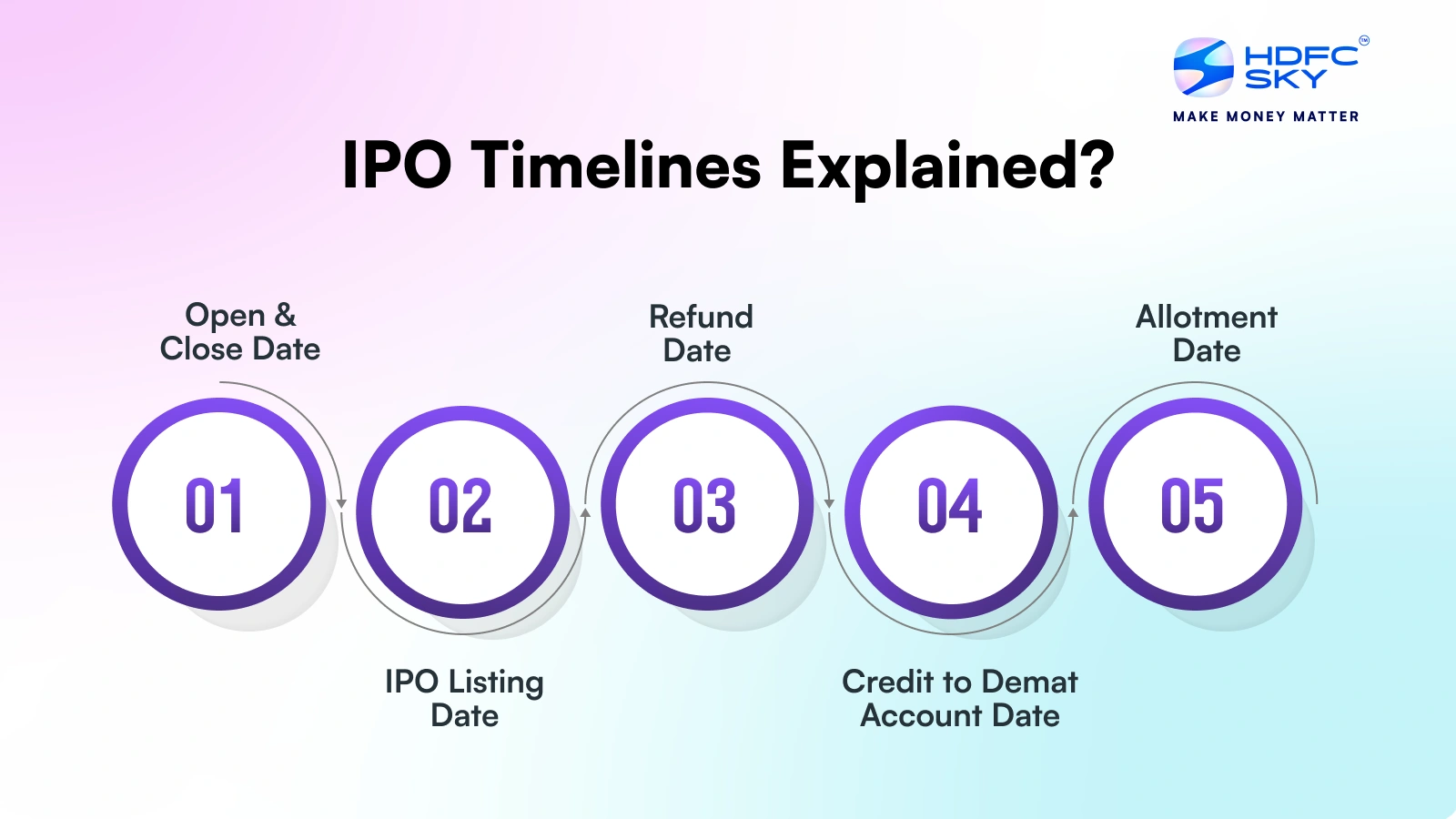
Here are the major time points that a retail investor should take note of while applying for an IPO –
- Open & Close Date – The IPO bidding process starts on the open date. As a potential retail investor, you can start applying or bidding for shares from this date onwards, until the close date. Basically, this is the time window for the IPO application.
- Allotment Date – The registrar of the IPO announces the status of the allotment to the public on this date. This declaration lets you know who received the allotment of shares and in what quantity.
- Refund Date – If there is an oversubscription, and you are not allotted the number of lots that you applied for, or not allotted any lot at all, then the remaining application amount is returned. The process of refunding the remaining amount which is temporarily frozen, until the allotment, starts from this day.
- Credit to Demat Account Date – This is the date when you receive your allotment i.e. the credited IPO shares in your Demat account. The credit of the shares in their respective Demat account essentially takes place before the listing date.
- IPO Listing Date – The listing date is the day when the shares of the IPO issuing company are officially listed on the stock exchange and are open for trading in the secondary market.
Note that IPO is a long and layered process – implying there are multiple steps. Starting from the step where the issuing company hires an underwriter to the listing on the stock exchange, several rules and regulations are to be adhered to. The timeline discussed above is strictly in line with the dates that are important for potential retail investors.
How to Invest in an IPO?
Now that you know the timelines of an IPO, here is a quick guide on how to invest in an IPO
- Evaluate the IPO Prospectus: Understand the company’s business, financials, and risks outlined in the IPO document.
- Take Note of Important Dates: Keep track of the IPO opening and closing dates, as well as the listing date.
- Open a Demat Account: You need a Demat account to hold shares in electronic form. Once you have decided you will apply, open a Demat account at the earliest. Without a Demat account, you won’t be able to apply for the IPO.
- Apply for IPO: Submit your application through your broker or online IPO platform during the IPO period.
- Check Allotment Status: After the IPO closes, check if you have been allotted shares.
- Apply for Refund if Applicable: If you haven’t been allotted shares, apply for a refund of your application money.
Related Articles
FAQs on IPO Timelines
Is IPO a good investment?
The financial health and growth potential of the company determine if the IPO is a good investment. If the issuing company’s current condition and potential growth are high and, the corresponding industry is doing well overall, an IPO investment is a great way to be part of a business’s growth story and returns.
How to sell IPO shares?
You can sell IPO shares post listing in the stock exchange for trading in the secondary market.
What is the timeline of an IPO?
From the perspective of a retail investor, first, there will be an open/close date to apply for the IPO. Next on the allotment date, the status of the allotment will be declared. If shares are not allotted, then a refund process will start. Post that allotted shares will be credited to Demat accounts and finally, the shares will be listed on a stock exchange for trading.
What is the time- period of an IPO?
A mainboard IPO process takes 8-12 months, while a SME IPO takes 3-5 months.