- Offerings
- Tools & Platforms
Tools & Calculators
- Open API
- Calculators
- SIP Calculator
- CAGR Calculator
- Compound Interest Calculator
- FD Calculator
- RD Calculator
- EPF Calculator
- Retirement Calculator
- HDFC SIP Calculator
- Mutual Fund Return Calculator
- Lumpsum Calculator
- Step Up SIP Calculator
- ETF SIP Calculator
- Brokerage Calculator
- Equity Margin Calculator
- SWP Calculator
- EMI Calculator
- MTF Calculator
- Pricing
- SKY Learn
- Mutual Funds
- Margin Trading
- Financial Planning
- Personal Finance
- Share Trading
- IPO
- Derivatives
- Currencies
- Intraday Trading
- Trading Strategies
- Demat Account
- Commodity
- ETF
How to Buy and Sell Put Options: How to Trade with Them?
By HDFC SKY | Updated at: May 18, 2025 11:03 PM IST
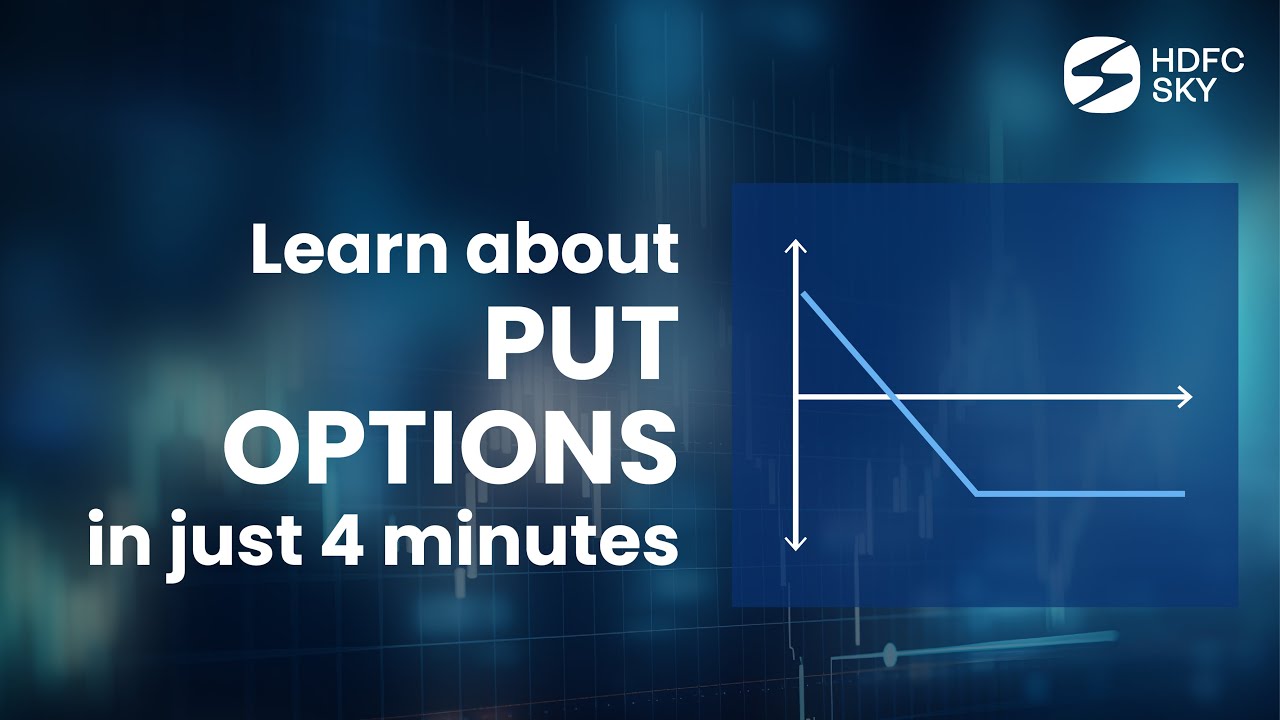
We covered buying and selling of call options in the last chapter. In this chapter, we will focus on the buying and selling of a put option, describing its specifications, understanding payoffs and more.
A put option gives the option holder the right but not the obligation to sell the underlying at a predetermined (or strike) price to the option writer.
A put option with a strike price of Rs 500 can be interpreted as an option that will give its buyer the right to sell the underlying instruments to the seller of the option for Rs 500 regardless of what the price of the underlying instrument might be at the time of exercise of the contract.
To give the option holder the right to exercise the contract at will, the put option writer charges an amount called the premium. Always, the buyer of the option pays premium to the seller of the option.
An option premium is made up of two components:
1. Intrinsic Value of the Option
The Intrinsic value of an option is the difference between the spot and strike price, which is also the payoff for the option.
For a put option the intrinsic value is calculated as strike price minus spot price.
2. Time Value of Option
The Time value of an option is calculated as the difference between the option premium and its intrinsic value.
The longer the time to expiry, the higher the time value of an option as the probability of getting a favourable price movement is higher. If you are a put option buyer, the chances of the underlying price going down would be higher over a period of one month as opposed to a couple of days.
The time value of an option decays to zero on expiry.
Before proceeding to number crunching, let’s try and understand why are put options widely used and for what purposes.
As mentioned before, a put option gives its holder the right to sell the underlying at a certain price.
The writer/seller of the put option is obligated to buy the underlying from the option holder should they choose to exercise their right as per the option contract.
The buyer of the option expects the price of the underlying to decrease and the seller expects the price to rise (or at least not fall) based on their research and analysis on the any particular underlying.
In order for the option contract to be profitable, the buyer will be expecting that the price of the underlying will drop below the strike price or else the buyer stands to suffer a loss limited to amount of premium paid.
Similarly, the seller of the option will be expecting that the price of the underlying will not drop below the strike price or else the seller can suffer unlimited loss that will be reduced by the amount of premium received.
Let’s say you want to sell 100 shares of Company N which is currently trading for Rs 500 in the market with the following option contracts available.
Long Put Option with Strike of Rs 510 with Premium of Rs 10 expiring in one month.
If the underlying price drops to Rs 480 after one month, this is how the payoff and profit scenarios will look for the parties involved:
- The option buyer will receive a payoff of Rs 30 per option. The payoff will be calculated as the difference between the strike price of Rs 510 and spot price of Rs 480. The buyer will receive a total payoff of Rs 3,000 (Rs 30 x 100 contracts).
- To obtain the total profit, the amount of premium paid is subtracted from the total payoff. The total profit for the option buyer will amount to Rs 2,000. Profit to buyer = Rs 3,000 – Rs 1,000 (100 contracts x premium of Rs 10 per share)
- The option seller will suffer a gross loss of Rs 30 per option. The payoff will be calculated as the difference between the spot price of Rs 480 and strike price of Rs 510. The seller will suffer a loss of Rs 3,000 (Rs 30 x 100 contracts). This loss will be reduced by Rs 1,000 that is the amount of premium received.
- The total loss to the seller will amount to Rs 2,000.
Loss to seller = Rs 1,000 (Premium received) – Rs 3,000 (loss due option exercise by buyer)
Long Put Option with Strike of Rs 500 with Premium of Rs 5 expiring in one month.
If the underlying price drops to Rs 495 after one month, this is how the payoff and profit scenarios will look for the parties involved:
- The option buyer will receive a payoff of Rs 5 per option. The payoff will be calculated as the difference between the strike price of Rs 500 and spot price of Rs 495. The buyer will receive a total payoff of Rs 500 (Rs 5 x 100 contracts).
- The profit for the option buyer will amount to Rs 0 after incorporating the amount of premium paid. Profit to buyer = Rs 500 – Rs 500 (100 contracts x premium of Rs 5 per share)
- The option seller will suffer a loss of Rs 5 per option. The payoff will be calculated as the difference between the spot price of Rs 495 and strike price of Rs 500. The seller will suffer a loss of Rs 0 as his loss will be reduced by Rs 500, the amount of premium received.
- The loss to the seller will amount to Rs 0.
Loss to seller = Rs 500 (Premium received) – Rs 500 (loss due option exercise by buyer)
Long Put Option with Strike of Rs 490 with Premium of Rs 2 expiring in one month.
If the underlying price rises to Rs 510 after one month, this is how the payoff and profit scenarios will look for the parties involved:
- Since the option is out of the money, the option holder will not exercise their option to sell the underlying.
- The loss to option buyer will be equal to amount of premium paid.
- Loss to buyer = Rs 200 (100 contracts x premium of Rs 2 per share)
- The option seller will make a profit of Rs 2 per option as the option to buy was not exercised by the holder.
Profit to seller = Rs 200 (Premium received)
An important point to note, in all above examples, the cost of brokerage and other statutory costs are assumed to be zero for the purpose of simplicity.
Related Articles