- Offerings
- Tools & Platforms
Tools & Calculators
- Open API
- Calculators
- SIP Calculator
- CAGR Calculator
- Compound Interest Calculator
- FD Calculator
- RD Calculator
- EPF Calculator
- Retirement Calculator
- HDFC SIP Calculator
- Mutual Fund Return Calculator
- Lumpsum Calculator
- Step Up SIP Calculator
- ETF SIP Calculator
- Brokerage Calculator
- Equity Margin Calculator
- SWP Calculator
- EMI Calculator
- MTF Calculator
- Pricing
- SKY Learn
- Mutual Funds
- Margin Trading
- Financial Planning
- Personal Finance
- Share Trading
- IPO
- Derivatives
- Currencies
- Intraday Trading
- Trading Strategies
- Demat Account
- Commodity
- ETF
Risks of Investing in IPOs: A Complete Investor’s Guide
By HDFC SKY | Updated at: Jul 25, 2025 12:34 PM IST
Summary
- High Valuations Risk: IPOs are often priced at a premium based on future growth expectations, not current earnings, which may lead to overvaluation and investor losses.
- Volatility Post-Listing: IPO stocks typically experience significant price swings immediately after listing due to speculative trading and low initial liquidity.
- Lack of Historical Performance: Investors face uncertainty due to limited past data, making it difficult to analyze a company’s long-term performance or resilience.
- Lock-in Period for Promoters: Promoters may be restricted from selling their shares for a set period, affecting supply-demand dynamics and price trends post-IPO.
- Changing Market Sentiment: Broader market conditions and investor sentiment shifts can heavily influence IPO success, regardless of company fundamentals.
- Risk of Misleading Information: IPOs rely on draft red herring prospectuses (DRHPs), which may not fully capture future risks, potentially leading to misguided investment decisions.
- Regulatory Risks: Newly listed companies may face unforeseen regulatory or legal challenges post-IPO that could impact profitability.
- Long-Term Performance Uncertain: Many IPOs underperform over time, and early hype may not translate into sustainable returns.

Opening a new business venture involves uncertainty – despite careful planning, its success depends on various factors beyond the owner’s control. Similarly, investment in IPO opportunities carries inherent risks about which investors should know.
In India’s rapidly growing IPO market, which saw record volumes in 2024, understanding what an IPO is and the associated risks is crucial for making informed investment decisions. Gaining a clear understanding of the full spectrum of risks involved in IPOs will empower you to make more careful and strategic decisions.
What is an IPO?
An Initial Public Offering (IPO) is the process by which a privately held company offers its shares to the public for the first time, and gets listed on a stock exchange. Through this process, companies seek to raise capital from public investors to fund expansion, pay down debt, or invest in new projects. Understanding what an IPO in the stock market helps investors recognise the fundamental aspects of IPO investing. The IPO process involves various stakeholders, including the issuing company, underwriters (who facilitate the offering), regulatory bodies, and investors. Each IPO sets a specific IPO risk percentage that investors should evaluate before participating.
Risks Investors Should Be Aware of
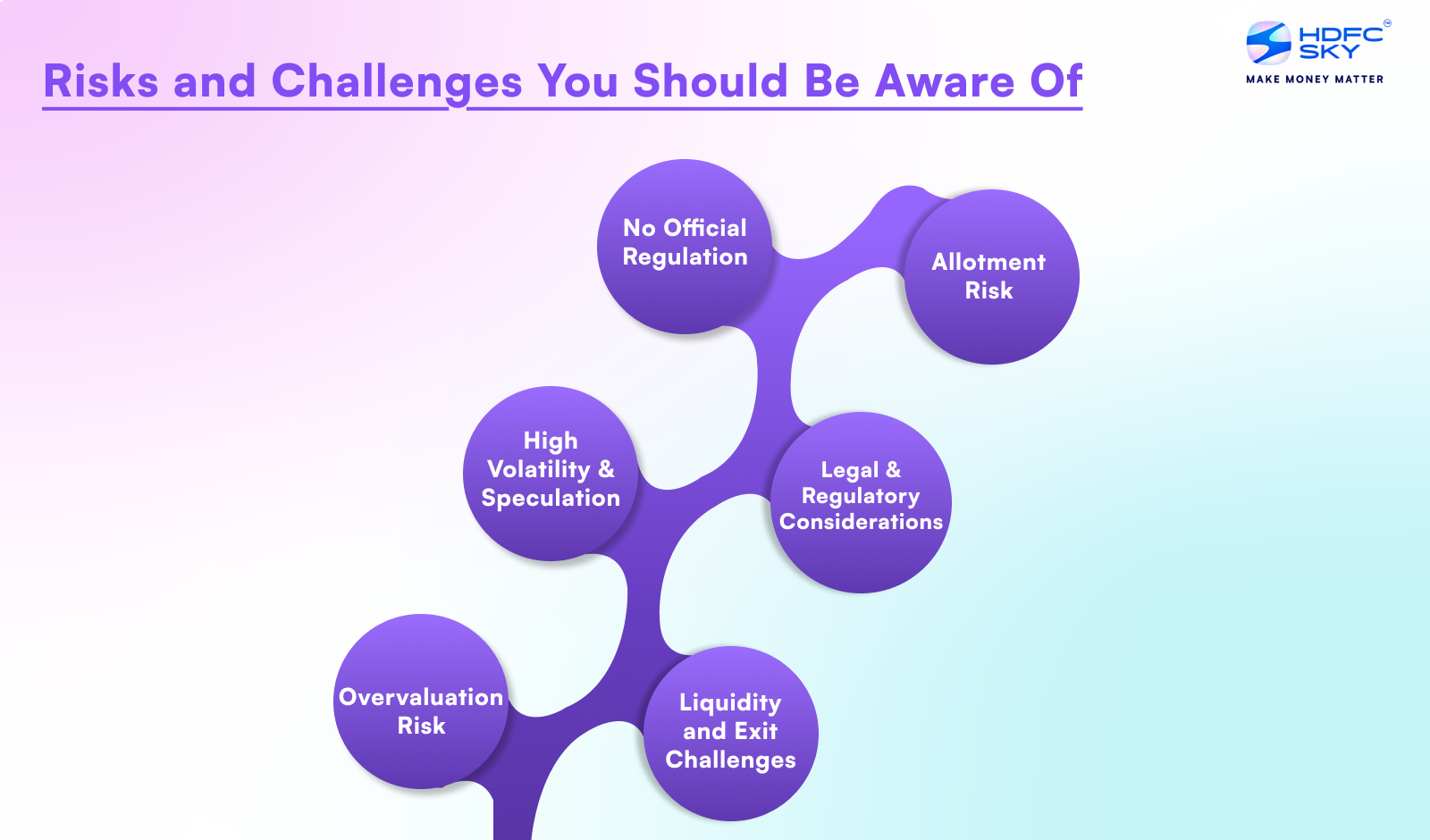
1. Over-Valuation Issues
Market hype can lead to overvaluation during an IPO, especially if the company’s fundamentals are not strong enough to justify the initial pricing or IPO price band. This presents a significant IPO risk for investors, as they may face challenges when the stock underperforms after the public listing. For instance, several high-profile IPOs in 2021-22 have seen their stock prices decline post-listing, highlighting the risks of pre-IPO investing.
2. No Assurance of Share Allotment
When applying for shares in an IPO, the allocation of shares remains uncertain. Recent data from Indian IPOs shows many issues being oversubscribed several times over, sometimes exceeding 100 times subscriptions. Such high demand reduces individual investors’ chances of receiving shares, adding another layer of uncertainty to IPO stocks investments.
3. Insufficient Information About the Company
Companies entering the public market often have limited operational history. This lack of track record may increase the risk as investors have fewer data points for analysis and investors are left with limited insight into the company’s long-term viability. Unlike established public companies, new entrants may not provide extensive historical performance data, making it challenging to assess their long-term potential.
How to Mitigate IPO Risks
1. Thoroughly Review the Prospectus
The prospectus contains critical information about and the company’s fundamentals. This document outlines business models, financial statements, and risk factors. In India, SEBI mandates comprehensive disclosure requirements, ensuring transparency and enabling investors to better understand what an IPO in the stock market entails.
2. Avoid Market Hype
Market enthusiasm around IPOs can create unrealistic expectations. For example, an IPO risk often increases when media coverage and market speculation drive up pre-listing interest without fundamental support. Investment in IPO decisions should focus on company fundamentals rather than market excitement.
3. Assess Your Financial Goals
Before investing in an IPO, understand your investment objectives and risk tolerance. Recent market data shows that IPO performance varies significantly across sectors and market conditions. Understanding personal risk tolerance helps in making appropriate investment decisions.
4. Risks of Investing with Leverage
Using leverage or borrowed funds for IPO investments can increase your risks. Several cases in the Indian market demonstrate how leveraged positions in IPOs led to significant financial stress when listings didn’t perform as expected.
5. Evaluate the Company’s Financial Health
Financial analysis provides crucial insights when considering whether to invest in an IPO or not. Examining revenue growth, profit margins, and debt levels helps assess company stability. This evaluation becomes extremely important for newly listed companies with limited trading history.
6. Assess Competition
Understanding the competitive landscape helps in evaluating an IPO in a better way. As an investor it is best recommended to run a quick research on the IPOs of the peers and see how they performed in their initial public offering.
7. Reputation of Underwriters
The credibility of investment bankers managing the IPO may also be considered. Established underwriters often bring better-prepared companies to market, potentially reducing overall IPO risk for investors.
Conclusion
The IPO market presents opportunities but requires careful consideration of various risks in IPO investment. Understanding what an IPO in the stock market entails, and recognising the potential pitfalls such as overvaluation, limited company history, and share allocation uncertainties, is essential for investors. By thoroughly reviewing the prospectus, avoiding market hype, aligning investments with personal financial goals, and evaluating the company’s financial health and competitive positioning, investors can mitigate risks.
Related Articles
FAQs on Risks of investing in IPO
What are the risks of pre-IPO investing?
Pre-IPO investments have limited liquidity, uncertain valuations, lack of transparency and the uncertainty of IPOs going public. There’s a higher chance of underperformance, especially with early-stage companies. Investors may also face limited governance rights and difficulty assessing opportunities due to insufficient public information, leading to uninformed decisions.
What happens if the IPO is not fully subscribed?
If an IPO fails to achieve minimum subscription levels, the company must refund applicants’ money with interest. SEBI regulations require a 90% minimum subscription for a successful listing. Undersubscribed IPOs may indicate weak market confidence or pricing issues.
Can I sell the shares I get in an IPO immediately?
Stock exchange regulations allow selling IPO shares immediately after listing, except for shares under lock-in restrictions. However, high volatility during initial trading days may affect selling prices and execution.
How to analyse an IPO?
Review the company’s prospectus focusing on the business model, financials, management quality, industry position, and risk factors. Examine competitive advantages, growth plans, and fund utilisation. Consider valuation metrics compared to industry peers and overall market conditions.