
- Offerings
- Tools & Platforms
Tools & Calculators
- Open API
- Calculators
- SIP Calculator
- CAGR Calculator
- Compound Interest Calculator
- FD Calculator
- RD Calculator
- EPF Calculator
- Retirement Calculator
- HDFC SIP Calculator
- Mutual Fund Return Calculator
- Lumpsum Calculator
- Step Up SIP Calculator
- ETF SIP Calculator
- Brokerage Calculator
- Equity Margin Calculator
- SWP Calculator
- EMI Calculator
- MTF Calculator
- Pricing
- SKY Learn
- Mutual Funds
- Margin Trading
- Financial Planning
- Personal Finance
- Share Trading
- IPO
- Derivatives
- Currencies
- Intraday Trading
- Trading Strategies
- Demat Account
- Commodity
- ETF
What is a Small Cap Stock? Know Reasons to Invest in Small Cap Stocks
By Shishta Dutta | Updated at: Oct 13, 2025 10:26 AM IST
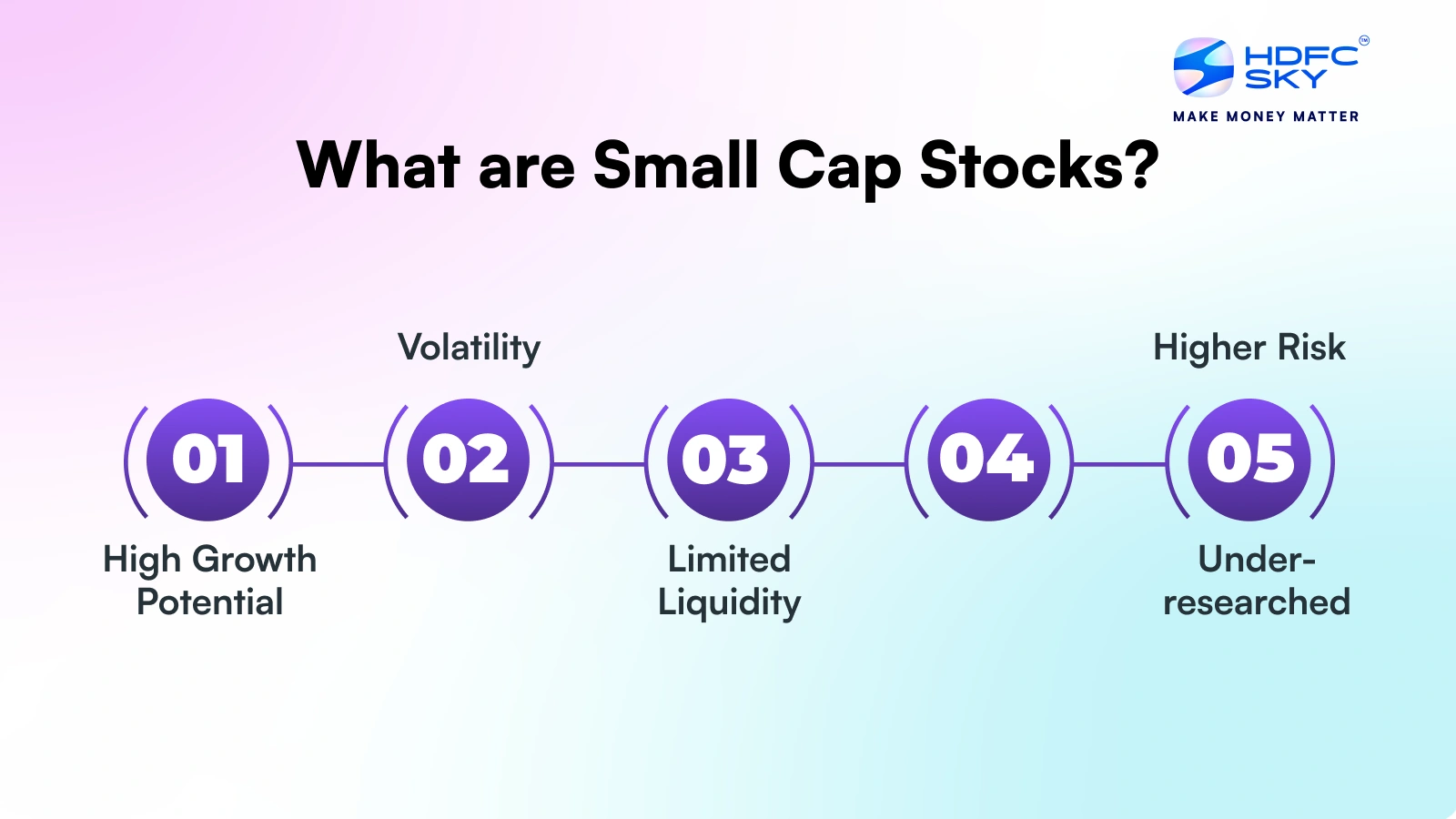
Small cap stocks refer to shares of publicly traded companies with a relatively small market capitalisation, typically ranging between ₹500 crore to ₹5,000 crore. These companies are often in their growth phase, offering high potential returns but also carrying higher risk due to market volatility and limited resources compared to larger firms.
What is a Small Cap Stock?
A small cap stock refers to the shares of a company whose market capitalisation typically falls between ₹500 crore and ₹5,000 crore. The term “small cap” is derived from “small market capitalisation”. These companies are usually in the early or growth stages of development and are often not industry leaders yet.
Small cap stocks are considered high-risk, high-reward investments. While they may offer substantial growth potential and significant returns over time, they can also be more volatile, less liquid and more sensitive to economic shifts compared to mid-cap or large-cap stocks. Investors in small cap stocks should have a higher risk tolerance and a long-term investment horizon.
Features of Small Cap Stocks
Small cap stocks represent companies with relatively smaller market capitalisation. They offer unique opportunities and risks for investors.
- Market Cap Range: Typically between ₹500 crore to ₹5,000 crore.
- High Growth Potential: These companies are in early growth stages with room to expand rapidly.
- Higher Volatility: Prices can fluctuate significantly due to market sentiment or low liquidity.
- Less Analyst Coverage: Often overlooked by analysts, leading to undervaluation opportunities.
- Illiquidity Risk: Lower trading volumes may lead to difficulty in buying or selling large quantities.
- Greater Risk: Higher chances of failure compared to well-established firms.
- Attractive for Long-Term Investors: Suitable for those willing to wait and bear short-term volatility.
Reasons to Invest in Small Cap Stocks
Small cap stocks can be a strategic addition to your portfolio, especially if you’re looking for high growth opportunities over the long term.
- High Growth Potential: Early-stage companies can expand rapidly, delivering significant returns.
- Undervalued Opportunities: Often overlooked by big investors, many small caps trade below their intrinsic value.
- Diversification: Adding small caps provides balance alongside large and mid-cap stocks.
- Agility: Smaller companies can adapt faster to market changes or innovations.
- Institutional Interest Over Time: As they grow, they attract more attention from mutual funds and institutional investors, boosting prices.
- Better Risk-Reward Ratio for Informed Investors: With proper research, investors can capitalise on market inefficiencies.
Advantages of Small Cap Stocks
Small cap stocks offer unique benefits for investors willing to take calculated risks for potentially higher rewards.
- High Growth Potential: These companies are in early growth stages, offering significant upside.
- Undervalued Entry Points: Often under-researched, they may trade below their true value.
- Greater Returns: Historically, small caps have outperformed large caps over long periods.
- Innovation and Agility: Small companies can adapt quickly to market trends or new technologies.
- Institutional Buying Opportunities: As they grow, they attract larger investors, driving up demand and prices.
Risks of Small-Cap Stocks
While small-cap stocks offer high growth potential, they also come with notable risks that investors should be aware of:
- High Volatility: Prices can fluctuate sharply due to low liquidity and market sentiment.
- Limited Financial Resources: Smaller companies may struggle during economic downturns.
- Lower Liquidity: Fewer buyers and sellers can make it harder to enter or exit positions.
- Less Analyst Coverage: Limited public information increases the risk of poor investment decisions.
- Higher Failure Rate: These companies are more vulnerable to competition and market changes.
Things to Check When Picking Small Cap Stocks
Before investing in small-cap stocks, it’s important to evaluate key factors that determine potential and risk:
- Strong Financials: Check for consistent revenue growth and manageable debt.
- Promoter Holding: Higher promoter ownership shows confidence in the company.
- Corporate Governance: Ensure transparency and ethical management practices.
- Business Model: Understand the company’s product, market and growth potential.
- Competitive Advantage: Look for a unique edge over peers in the same sector.
- Valuation: Compare P/E and P/B ratios with industry averages.
- Liquidity: Ensure the stock is actively traded to avoid exit issues.
- Past Performance: Review historical returns but don’t rely solely on them.
- Market Sentiment: Check analyst reports and investor outlook.
- Growth Outlook: Ensure the company is in a growing sector or niche.
How to Invest in Small Cap Stocks
Investing in small-cap stocks can offer high growth potential but comes with higher risk. It’s important to approach with research and a long-term view.
- Open a Demat & Trading Account with a registered broker.
- Use a Trusted Stock Screener to identify potential small-cap companies.
- Research the Fundamentals such as revenue growth, debt levels and management quality.
- Diversify Your Portfolio to reduce risk from individual stock volatility.
- Consider Small Cap Mutual Funds or ETFs if you prefer managed exposure.
- Invest for the Long Term, as small caps may take time to grow.
- Monitor Performance Regularly but avoid making impulsive decisions.
Small Cap vs Mid Cap vs Large Cap Stocks
These categories help investors understand company size, growth potential and risk level. Here’s how they compare:
| Category | Market Capitalisation Range | Risk Level | Growth Potential | Liquidity | Suitable For |
| Small Cap | Less than ₹5,000 crore | High | High | Low | Aggressive/long-term investors |
| Mid Cap | ₹5,000 crore – ₹20,000 crore | Moderate | Moderate to High | Moderate | Balanced investors |
| Large Cap | Above ₹20,000 crore | Low | Stable/Moderate | High | Conservative investors |
Conclusion
Small cap stocks present an opportunity for investors willing to take on higher risk for the potential of higher returns. By understanding their features, reasons to invest and advantages, you can make informed decisions about incorporating small cap stocks into your investment portfolio. Remember to stay updated with the latest market trends and conduct thorough research to identify the best small cap stocks to buy.
Related Articles
FAQs on Small Cap Stocks
Is it good to invest in small cap?
Small-cap stocks offer high growth potential but come with higher risk and volatility, suitable for investors with a higher risk appetite.
Is it better to invest in small-cap or large-cap?
Large-cap stocks are more stable and less risky, while small-caps offer greater growth but more volatility; a balanced portfolio often includes both.
What are small cap stocks in India?
Small cap stocks in India refer to companies with a market capitalization between ₹500 crore and ₹5,000 crore. But this criterion may change from time to time. These companies are typically smaller in size compared to mid-cap and large-cap companies but offer high growth potential.
Is it okay to invest in small cap stocks?
Yes, investing in small cap stocks can be okay, but it comes with higher risks. These stocks can offer significant growth potential, but they are also more volatile and less liquid. It’s essential to conduct thorough research and consider your risk tolerance before investing.




