- Offerings
- Tools & Platforms
Tools & Calculators
- Open API
- Calculators
- SIP Calculator
- CAGR Calculator
- Compound Interest Calculator
- FD Calculator
- RD Calculator
- EPF Calculator
- Retirement Calculator
- HDFC SIP Calculator
- Mutual Fund Return Calculator
- Lumpsum Calculator
- Step Up SIP Calculator
- ETF SIP Calculator
- Brokerage Calculator
- Equity Margin Calculator
- SWP Calculator
- EMI Calculator
- MTF Calculator
- Pricing
- SKY Learn
- Mutual Funds
- Margin Trading
- Financial Planning
- Personal Finance
- Share Trading
- IPO
- Derivatives
- Currencies
- Intraday Trading
- Trading Strategies
- Demat Account
- Commodity
- ETF
Understanding The IPO Process & Need for the IPO Process
By HDFC SKY | Updated at: Oct 17, 2025 03:22 PM IST

The Initial Public Offering (IPO) process is an important step for a private company to transition into a publicly listed entity by offering its shares to the general public for the first time. This move helps companies raise substantial capital to fund expansion, reduce debt or improve infrastructure. The IPO process involves multiple stages such as appointment of underwriters, due diligence, SEBI approval, pricing and listing on a stock exchange. For investors IPOs present an opportunity to invest early in a company’s growth journey. Understanding the IPO process is essential for both businesses planning to go public and individuals aiming to make informed investment decisions.
What is IPO (Initial Public Offering)?
An Initial Public Offering (IPO) is the process through which a privately held company becomes publicly traded by offering its shares to the general public for the first time. This transition helps the company raise substantial capital to fund expansion, reduce debt or invest in new projects. In return investors gain an opportunity to own a stake in the company and potentially benefit from its future growth. IPOs are typically regulated by market authorities like SEBI in India, ensuring transparency and investor protection throughout the process.
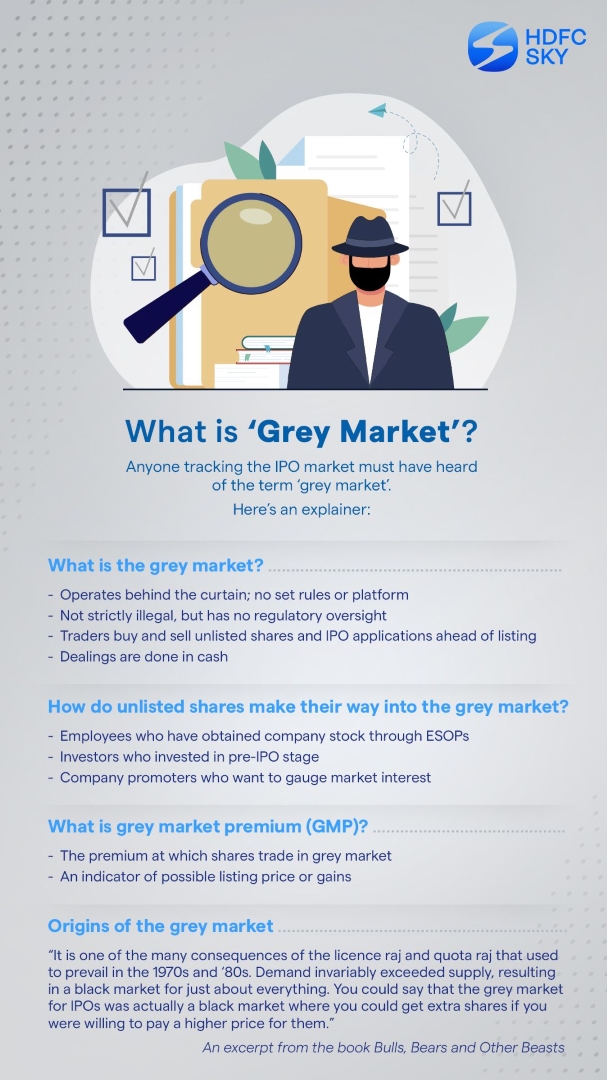
What is Grey Market?
Understanding the Need for the IPO Process
Here are the key reasons why the IPO process is important for a company
- Capital Generation: It helps companies raise substantial funds from the public to finance expansion, new projects or debt reduction.
- Brand Credibility: Being a publicly listed company enhances reputation, trust and transparency among stakeholders and customers.
- Liquidity for Existing Investors: IPOs offer early investors and founders a chance to partially or fully exit their investments.
- Market Visibility: A public listing increases the company’s visibility in the market, attracting analysts and media attention.
- Growth Opportunities: The raised capital and public profile support long-term strategic initiatives and global expansion plans.
- Better Valuation: Public companies often enjoy higher market valuations due to investor confidence and market-driven price determination.
The IPO Process
Companies cannot go from being privately held to publicly traded entities overnight. It is a long-drawn process that can be both costly and time-consuming. In India, the stock exchanges in conjunction with the market regulator SEBI have stipulated the following 8-step process for companies to offer shares through an IPO:
1) Appointment of Lead Manager
Any company that wants to explore the option of IPO appoints a merchant banker also called lead manager or book running lead manager for the issue. Lead managers are large financial institutions such as investment banks that help a company throughout the process to ensure the IPO gets a good response from the public and they subscribe to the IPO.
They are responsible for mapping out the IPO process including assessing how much funds the company can raise, the size of the issue as well as the price band (the lower and upper share price limit within which the company will offer those shares). Lead managers also help the company in drafting regulatory paperwork such as draft red herring prospectus and getting them approved from SEBI and stock exchanges.
Some lead managers also provide underwriting services. As part of this service, the lead manager/s buy the IPO shares, either the whole or part of the unsubscribed portion of shares and subsequently, sell them in the market. This is to ensure that the company raises the full money it aimed to garner through the IPO.
Depending on the size of the issue, a company can appoint multiple lead managers.
2) IPO Registration
Once the details of the IPO have been chalked out, the lead managers on behalf of the company file a registration statement along with the draft prospectus with SEBI. This is essential to get a go-ahead for the IPO.
The draft prospectus also known as Draft Red Herring Prospectus (RHP) contains key information on the IPO, the company, its management, its financial statements, as well as risks and opportunities for the company.
Trivia: Why is it called a Draft ‘Red Herring’ Prospectus? The term originates from the text that used to be imprinted in red letters on top of the prospectus filed with any market regulator stating that the shares will not be offered until the company gets the required clearances.
3) Clearance from SEBI
After receiving the aforementioned documents, SEBI verifies the disclosure of facts by the company. If the application is approved, the company can announce a date for its IPO.
4) Getting the nod from stock exchanges
Once verification by SEBI is complete, the company has to file an application with the stock exchanges for floating its initial issue.
5) Marketing the IPO
After the required approvals are received, it is time to create a buzz around the impending IPO. This involves building awareness about the company via TV, digital and print advertisements. The management meets prospective large investors to share details of the company’s plans and make a pitch to them to subscribe to the IPO. This process is called the IPO roadshow.
6) Pricing of the IPO and book building
The response from investors during the roadshow gives the company and the lead manager an insight into the demand for the shares offered in the IPO. This helps determine the price band at which the IPO can be offered in the market. A price band consists of a lower and upper limit within which investors can bid for the shares. The company advertises the price band widely through national print and digital media and the details are also available on the websites of leading stock exchanges in the country.
7) Book building and determination of price
Once the IPO is launched, people who want to apply for the IPO can choose a price they think is fair within the price band. Information on the different prices at which investors have bid for the shares and the number of shares that they have bid for is collated during the subscription window (which is generally around 3 to 4 days). This is called book building. Companies use this method to arrive at the final price at which the shares will be allotted or issued to the investors.
8) Share allotment
At this stage, the company and the underwriters determine the number of shares to be allotted to each investor.
If the issue is oversubscribed i.e., the demand for shares is more than the number of shares on offer then partial allotments will be made. Those who are not allotted any shares will be refunded their money.
Investors who have been allotted the shares will receive them in their Demat account. IPO stocks are usually allotted to the bidders within 10 working days of the last bidding date.
9) Listing day
This is when the stock finally debuts on exchanges. The listing price or the price at which the stock debuts on the stock exchange depends on the demand and supply dynamics for the shares in the market. If the demand is more than supply, the stock typically lists at a premium to the issue price. This means if a stock has been issued at Rs 100, it may list on the exchanges at more than Rs 100. The stock could also trade a par to the issue price or a discount i.e., below the issue price.
Role of SEBI in the IPO Process
SEBI (Securities and Exchange Board of India) plays a crucial role in regulating and overseeing the IPO process to ensure transparency, fairness, and investor protection.
- Reviews and approves the Draft Red Herring Prospectus (DRHP)
- Ensures companies comply with disclosure norms
- Monitors allotment process and listing timelines
- Protects investor interests by enforcing regulations
Conclusion
The IPO process is a detailed and regulated journey that helps private companies become publicly traded entities. It not only enables businesses to raise capital and expand but also offers investors a chance to participate in the company’s growth from an early stage. Each step, from appointing lead managers to the final listing day, plays a crucial role in ensuring transparency and market confidence. A well-executed IPO strengthens a company’s reputation, improves valuation, and sets the stage for long-term success in the capital market.
Related Articles
FAQs
How long does the IPO process typically take in India?
The IPO process in India usually takes 6 to 8 weeks, depending on regulatory approvals and company preparedness.
What is the IPO process in India?
The IPO process involves appointing a merchant banker, filing a Draft Red Herring Prospectus (DRHP) with SEBI, getting approvals, marketing the issue, opening for subscription, allotting shares, and finally getting listed on the stock exchange.
Who regulates the IPO process in India?
The Securities and Exchange Board of India (SEBI) regulates the IPO process to ensure transparency and protect investors.