- Offerings
- Tools & Platforms
Tools & Calculators
- Open API
- Calculators
- SIP Calculator
- CAGR Calculator
- Compound Interest Calculator
- FD Calculator
- RD Calculator
- EPF Calculator
- Retirement Calculator
- HDFC SIP Calculator
- Mutual Fund Return Calculator
- Lumpsum Calculator
- Step Up SIP Calculator
- ETF SIP Calculator
- Brokerage Calculator
- Equity Margin Calculator
- SWP Calculator
- EMI Calculator
- MTF Calculator
- Pricing
- SKY Learn
- Mutual Funds
- Margin Trading
- Financial Planning
- Personal Finance
- Share Trading
- IPO
- Derivatives
- Currencies
- Intraday Trading
- Trading Strategies
- Demat Account
- Commodity
- ETF
Commodity Trading in India: Meaning, Types, Benefits & How to Start
By Ankur Chandra | Updated at: Jul 28, 2025 01:00 PM IST
Summary
- Commodity trading involves buying and selling of raw materials like gold, silver, crude oil, and agricultural products through spot markets or derivative contracts.
- There are two main types of commodities: hard commodities (natural resources like metals and energy) and soft commodities (agricultural goods).
- Major commodity exchanges in India include MCX and NCDEX, which facilitate transparent, regulated trading.
- Commodity trading can be used for both hedging and speculation, allowing participants to manage price risk or profit from price movements.
- Derivative instruments such as futures and options are commonly used in commodity markets to lock in prices or gain leveraged exposure.
- Commodity prices are influenced by global demand-supply dynamics, geopolitical factors, and economic indicators.
- Trading is regulated by SEBI in India, ensuring compliance and investor protection.
- Commodities offer portfolio diversification, especially during inflationary periods or market volatility.
Have you noticed how traders profit from the rise and fall of gold or the ripple effects of monsoon on crop prices?
This is what commodity trading is all about—the prices of raw materials will help you accumulate wealth.
In this comprehensive blog, we will learn what is commodity trading in India, how it works, benefits of commodity trading, and how you can participate.
What Is Commodity Trading and How Does it Work?
Let us learn commodity trading for beginners. Commodity trading involves buying and selling products like industrial raw materials (copper, silver and more), agricultural commodities (cotton and wheat), base metals, oil and precious metals like gold. Traders aim to profit from the fluctuations in the price of these commodities.
What Is Commodity Trading in India?
Commodity market trading in India is regulated by the Securities and Exchange Board of India (SEBI). It occurs on commodity exchanges, where traders buy and sell standardised contracts for specific commodities. These contracts specify the quantity, quality, and delivery date of the commodity.
How to do Commodity trading?
To participate in commodity trading, you must open a trading account with a commodity broker. You can then access the commodity exchanges through the broker’s trading platform and place orders to buy or sell commodity contracts.
Types of Commodities Traded in India
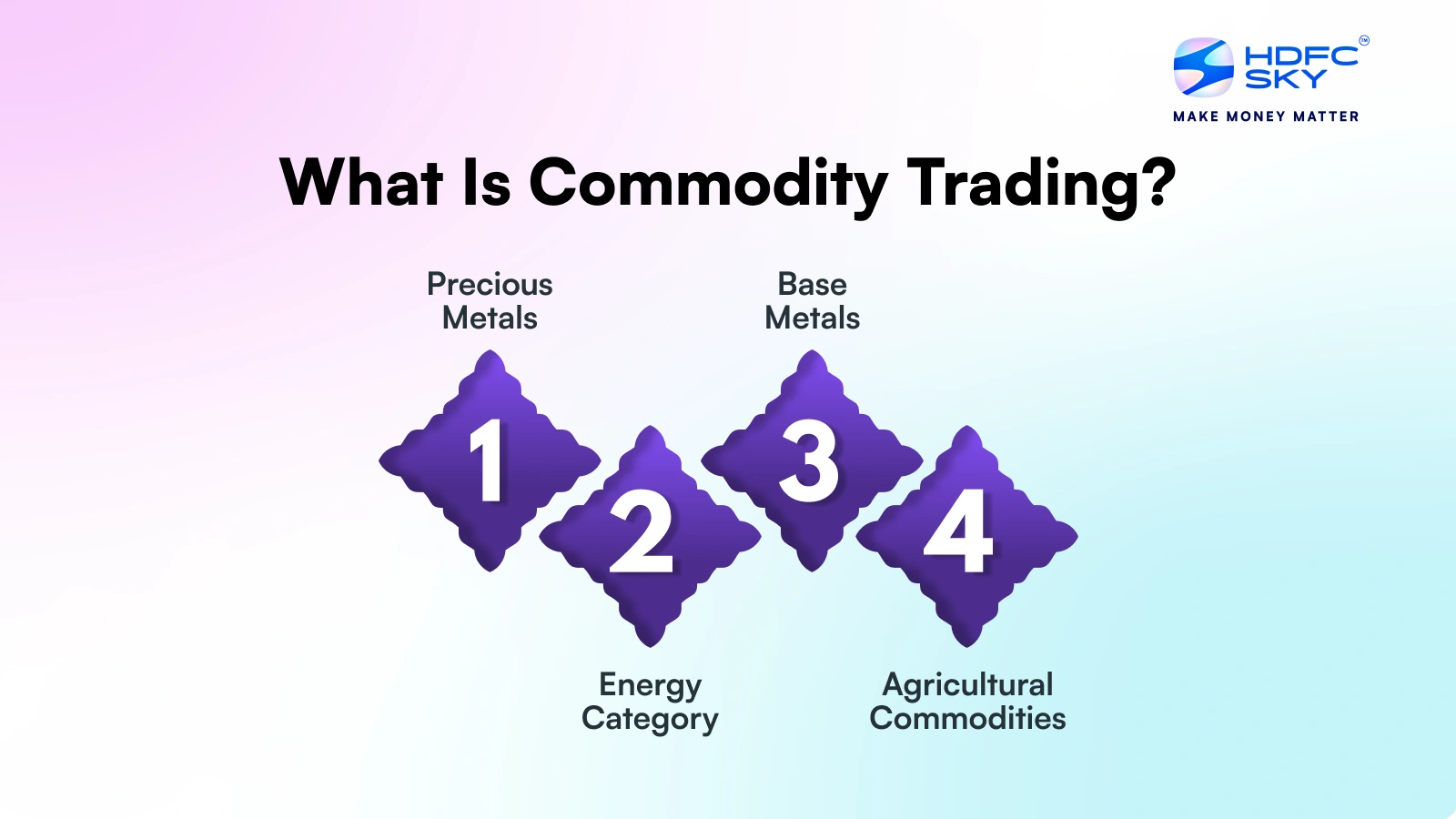
Commodity trading in India spans a wide array of products, categorised into four major segments. These include:
- Precious Metals, such as silver and gold, are the most popular choice among traders and are often known to be a safe option in investments, especially in times of uncertainty.
- Base Metals, also known as industrial metals, consisting of aluminium, copper, lead, nickel, and zinc, are another popular choice among traders. These metals are in high demand in manufacturing, construction, and other industries.
- Crude oil and natural gas fall under the Energy category. These items are often affected by global demand, supply disruptions, and geopolitical factors
- Agricultural Commodities: This segment includes staples like cotton, coffee, rice, wheat, and soybean oil. Prices of these commodities are often impacted by weather patterns, government policies, and global trade flows.
In India, exchanges like the Multi Commodity Exchange (MCX) and National Commodity and Derivatives Exchange (NCDEX) facilitate trading in these diverse commodities, offering investors and traders a chance to diversify their portfolios.
- Multi Commodity Exchange of India (MCX): MCX facilitates trading in a diverse range of commodities, including:
- Precious Metals: Gold, Silver
- Base Metals: Aluminium, Copper, Lead, Nickel, Zinc
- Energy: Crude Oil, Natural Gas
- Agricultural Commodities: Cotton, Mentha Oil, Crude Palm Oil, Cardamom
- National Commodity and Derivatives Exchange (NCDEX): NCDEX primarily focuses on agricultural commodities, offering trading in:
- Cereals and Pulses: Wheat, Rice, Maize, Chana
- Oilseeds and Oils: Soybean, Mustard Seed, Soybean Oil
- Fibres: Cotton, Jute
- Spices: Turmeric, Jeera (Cumin), Coriander
These exchanges provide a structured platform for traders and investors to engage in commodity derivatives, enabling portfolio diversification and opportunities to hedge against price volatility.
List of Commodity Exchanges in India
India has several commodity exchanges, including:
- Multi Commodity Exchange (MCX)
- National Commodity and Derivatives Exchange (NCDEX)
- National Multi-Commodity Exchange of India (NMCE)
- Indian Commodity Exchange (ICEX)
MCX dominates the Indian commodity trading landscape, holding a massive 97% market share. The majority of trading in commodities, especially precious metals, base metals, energy commodities, and select agricultural products like cotton, takes place on MCX.
NCDEX primarily focuses on agricultural commodities such as wheat, rice, soybean, mustard seed, and spices like turmeric and jeera (cumin). It is the go-to exchange for agri-commodity trading in India.
How to Invest in Commodities
There are various ways to invest in commodities:
- Futures Contracts: Standardised contracts to buy or sell a commodity at a future date.
- Options Contracts: Give the buyer the right, but not the obligation, to buy or sell a commodity at a specific price.
- Commodity ETFs: Exchange-traded funds that track the price of a specific commodity or a basket of commodities.
- Physical Metals: Direct investment in tangible assets like gold and silver, often considered safe-haven investments.
Commodities Traded on MCX and NCDEX
- Commodities on MCX: MCX offers trading in a wide range of commodities, including bullion (gold, silver), energy (crude oil, natural gas), metals (copper, aluminium), and agricultural commodities (cotton, mentha oil).
- Commodities on NCDEX: NCDEX primarily focuses on agricultural commodities like wheat, soybeans, guar gum, and spices.
How Does Commodity Trading Work?
Commodity trading involves speculating on the price movements of commodities. Traders buy contracts when they expect prices to rise and sell contracts when they anticipate price declines. The profit or loss is determined by the difference between the buying and selling price of the contract.
Example of Commodity Trading
Ravi, an experienced trader, anticipates a rise in crude oil prices due to an expected decrease in global supply caused by geopolitical tensions in oil-producing regions. He decides to participate in commodity trading through the futures market.
Step 1: Analysing the Market
Ravi conducts market research and notices that:
- The current crude oil price is ₹6,000 per barrel.
- A futures contract for crude oil (standardised at 100 barrels per contract) is trading at ₹6,000 per barrel for delivery in one month.
Ravi predicts that crude oil prices will rise to ₹6,300 per barrel within the next month.
Step 2: Buying the Futures Contract
Based on his analysis, Ravi buys one crude oil futures contract at ₹6,000 per barrel. The total contract value is:
- ₹6,000 x 100 barrels = ₹6,00,000
- Ravi does not need to pay the full contract value upfront. Instead, he deposits a margin amount (typically 5-10% of the contract value) with the exchange, which comes to around ₹30,000 to ₹60,000, depending on the margin requirements.
Step 3: Price Movement and Profit
As Ravi predicted, geopolitical tensions lead to a reduction in crude oil supply, causing prices to rise. After 20 days, the price of crude oil increases to ₹6,300 per barrel.
- Now, the value of Ravi’s futures contract is:₹6,300 x 100 barrels = ₹6,30,000
- Ravi decides to sell the futures contract before it expires, locking in his profit.
Step 4: Calculating the Profit
Ravi’s profit from the trade is:₹6,30,000 – ₹6,00,000 = ₹30,000
This profit is earned with just the margin deposit he initially paid, giving him a high return on his capital.
Importance of Investing in the Commodities Market
While stocks and bonds often take centre stage in investment portfolios, commodity trading offers a compelling avenue for diversification and potential profit. Here is why investing in the commodity market can be a valuable strategy:
- Diversification
One of the cardinal rules of investing is diversification—not putting all your eggs in one basket. Commodities often have a low correlation with traditional asset classes like stocks and bonds, meaning their prices may move independently of stock market fluctuations. By including commodities in your portfolio, you can reduce overall portfolio volatility and potentially enhance returns.
- Inflation Hedge
Inflation erodes the purchasing power of your money over time. However, some commodities, particularly precious metals like gold and silver, tend to perform well during periods of high inflation. This is because their prices often rise with the increasing cost of goods and services. Including such commodities in your portfolio can act as an inflation hedge, preserving the value of your investments during inflationary periods.
- Potential for High Returns
Commodity markets can be quite volatile, with prices fluctuating significantly based on supply and demand dynamics, geopolitical events, and economic conditions. While this volatility carries inherent risks, it also creates opportunities for significant profits. Savvy traders who can accurately anticipate price movements can capitalise on these fluctuations to generate substantial returns.
However, it is crucial to remember that commodity trading has risks. The high volatility that creates profit potential can also lead to significant losses. It’s essential to approach commodity trading with a sound understanding of market dynamics, risk management strategies, and a well-defined trading plan.
Advantages of Commodity Trading
Why commodity trading is better? Let us figure it out.
- Hedging: Producers and consumers of commodities can use futures contracts to hedge against price fluctuations.
- Leverage: Commodity trading often involves leverage, allowing traders to control larger positions with smaller capital.
- Transparency: Commodity exchanges provide transparent pricing and regulated trading environments.
- Flexible Commodity Trade Timing: Commodity markets in India remain open till 11:30 PM, providing a convenient opportunity for those unable to trade during regular market hours. This extended timing allows individuals with day jobs or other commitments to actively participate in the market.
Disadvantages of Commodity Trading
- High Risk: Commodity prices can be highly volatile, leading to significant losses.
- Requires Expertise: Successful commodity trading requires knowledge of market dynamics, technical analysis, and risk management.
- Margin Requirements: Trading commodity futures involves margin requirements, which can amplify losses.
How to Choose a Commodity Broker?
You can find commodity trading tips and tricks in demat apps. When choosing a commodity broker, consider these factors:
- Regulation: You can ensure that the broker is registered with SEBI and follows regulatory guidelines.
- Trading Platform: Traders can evaluate the broker’s trading platform for user-friendliness, features, and reliability.
- Fees and Charges: You can compare brokerage fees, transaction charges, and other costs associated with trading.
- Research and Support: You can look for a broker that offers tips for commodity trading, research reports, market analysis, and customer support.
Conclusion
So, now you know the tradable commodities and how you can trade them. Before trading in commodities, you can learn about the nitty gritties of commodities trading and commodities market and be prepared to enter it with the power of knowledge and smart demat app tools.
Related Articles
FAQs on What Is Commodity Trading?
Where can I trade commodities?
You can trade commodities on commodity exchanges like the Multi Commodity Exchange (MCX) and the National Commodity & Derivatives Exchange (NCDEX) in India. You’ll need a trading account with a registered broker to access these exchanges.
How does commodity trading work?
Commodity trading involves buying and selling standardised contracts for specific commodities. You profit by buying low and selling high, or vice versa, based on your speculation of future price movements.
When does the commodity market open?
The commodity market in India opens at 9:00 AM for most commodities. However, timings can vary slightly depending on the commodity and the exchange.
When do commodity markets close?
Commodity markets in India generally close at 11:30 PM or 11:55 PM, depending on the commodity and the exchange. This allows for extended trading hours compared to the equity market.
What is commodity trading time in India?
Commodity trading hours in India are typically from 9:00 AM to 11:30 PM or 11:55 PM, depending on the commodity and the exchange. This allows traders greater flexibility.
What are the commodity trading ways and tricks?
You need to do your research on chosen commodities, stay updated on market trends, and use technical analysis like charts and indicators to identify opportunities. You can manage risk with stop-loss orders, and stay disciplined by avoiding emotional trading.