- Offerings
- Tools & Platforms
Tools & Calculators
- Open API
- Calculators
- SIP Calculator
- CAGR Calculator
- Compound Interest Calculator
- FD Calculator
- RD Calculator
- EPF Calculator
- Retirement Calculator
- HDFC SIP Calculator
- Mutual Fund Return Calculator
- Lumpsum Calculator
- Step Up SIP Calculator
- ETF SIP Calculator
- Brokerage Calculator
- Equity Margin Calculator
- SWP Calculator
- EMI Calculator
- MTF Calculator
- Pricing
- SKY Learn
- Mutual Funds
- Margin Trading
- Financial Planning
- Personal Finance
- Share Trading
- IPO
- Derivatives
- Currencies
- Intraday Trading
- Trading Strategies
- Demat Account
- Commodity
- ETF
- What is Margin Trading?
- How Margin Trading Works?
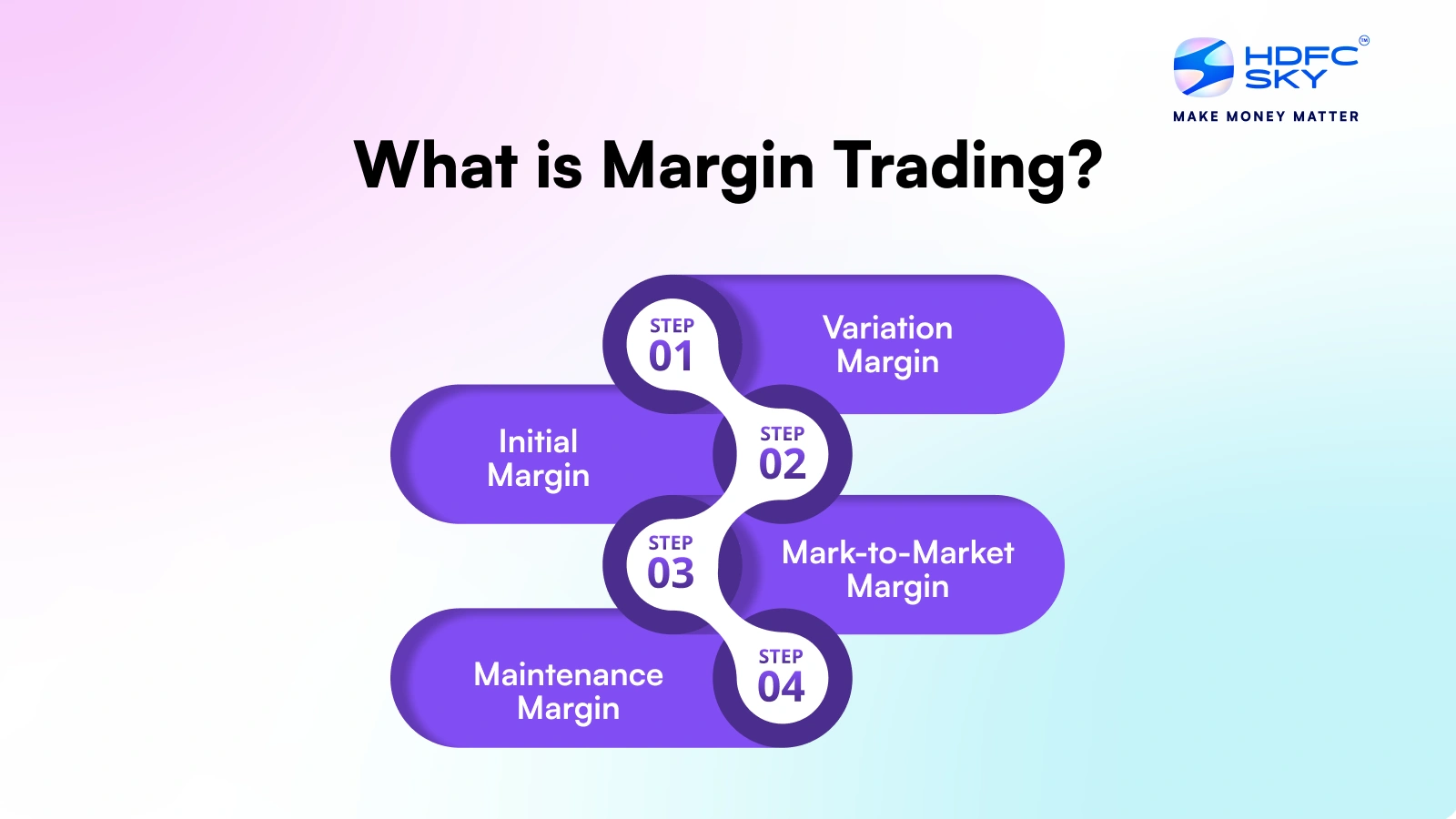
- Types of Margins
- What are the Features of Margin Trading in India?
- Advantages of Margin Trading
- Disadvantages of Margin Trading
- Risks Associated with Margin Trading
- Dos and Don’ts to Make the Most of Margin Trading
- Eligibility Criteria for Margin Trading
- SEBI Regulations Regarding Margin Trading
- Strategies for Using Margin Trading Wisely
- Conclusion
- FAQs on What is Margin Trading?
- What is Margin Trading?
- How Margin Trading Works?
- Types of Margins
- What are the Features of Margin Trading in India?
- Advantages of Margin Trading
- Disadvantages of Margin Trading
- Risks Associated with Margin Trading
- Dos and Don’ts to Make the Most of Margin Trading
- Eligibility Criteria for Margin Trading
- SEBI Regulations Regarding Margin Trading
- Strategies for Using Margin Trading Wisely
- Conclusion
- FAQs on What is Margin Trading?
What is Margin Trading? Know the Features of Margin Trading in India?
By HDFC SKY | Updated at: Oct 17, 2025 05:57 PM IST
Summary
- Definition: Margin Trading allows investors to buy securities by paying a portion of the total value (margin) while the broker funds the rest, amplifying buying power.
- Key Benefit: It helps traders take larger positions than their actual capital, increasing potential returns on investment in the short term.
- Usage Scope: Typically used for intraday or short-term trading strategies in equities; not ideal for long-term investments due to interest charges and risk exposure.
- Leverage Dynamics: The extent of leverage depends on the stock and regulatory guidelines. Brokers like HDFC SKY may offer 5x or more depending on eligibility and stock category.
- Risk Factor: High risk due to market volatility. Losses can exceed initial investment; hence margin calls and stop losses are important to manage exposure.
- Regulatory Oversight: Governed by SEBI’s margin norms to ensure transparency and protect retail investors from excessive risk.
- Account Requirement: Requires activation of a Margin Trading Facility (MTF) account with the broker and compliance with margin funding terms.
- Investor Caution: Ideal for experienced traders with high risk tolerance. Not suitable for conservative investors or those new to equity trading.
Margin trading is a strategy where investors borrow funds from a broker to buy more securities than they could with their available capital. It amplifies both potential gains and losses, making it a high-risk, high-reward approach used mostly by experienced traders to leverage their positions in the market.
What is Margin Trading?
Margin trading meaning refers to the practice of borrowing money from a broker to purchase stocks or other financial instruments. The Margin Trading Facility (MTF) allows investors to buy securities by paying only a part of the total value upfront, while the rest is funded by the broker. This helps traders take larger positions than their actual capital permits but also increases risk due to potential losses if the market moves unfavourably.
How Margin Trading Works?
Margin trading operates on the simple principle that you borrow money from your broker to buy more stocks than you could with your funds.
- You need to open a margin account with your broker.
- You should then deposit the initial margin, which serves as collateral.
- You might need to borrow additional funds from the broker to purchase more shares.
- You have to pay interest on the borrowed amount.
- You must monitor your account to ensure it maintains the required maintenance margin.
- When you are ready to close the position, you sell the securities and repay the loan.
Remember while this process can amplify your potential gains, it can also magnify your losses if the stock price moves against your position.
Margin Trading Example: To execute a margin trade, you first open a margin account with your broker and deposit ₹20,000 as the initial margin, which acts as collateral. You then borrow ₹80,000 from your broker to purchase shares worth ₹1,00,000. You need to pay interest on the borrowed amount. It’s crucial to monitor your account to ensure it maintains a maintenance margin of ₹15,000. When you’re ready to close your position, you sell the shares and repay the loan.
Types of Margins
Now that you know what margin means in trading, it is time to learn about the different types of margins you will encounter in the share market:
- Initial Margin: This is the minimum amount you must deposit to open a margin account. ‘It is typically a percentage of the total purchase value of the securities.
- Maintenance Margin: This represents the minimum account balance you must maintain to keep your margin position open. If your account value falls below this level, you may face a margin call.
- Variation Margin: This is a type of margin applicable in futures trading. Daily calculations record the impact of what happens in the next few hours on the value of open positions.
- Mark-to-Market Margin: This margin is computed based on the current market value of the securities in your margin account.
Let’s consider you are buying shares worth ₹1,00,000 on margin:
- Initial Margin: Deposit ₹25,000 (25% of ₹1,00,000) to open the account.
- Maintenance Margin: Maintain at least ₹15,000. If your account value drops below this, you face a margin call.
- Variation Margin: In futures, if the market drops by 2%, you might need to deposit ₹2,000 more.
- Mark-to-Market Margin: If the market value of your shares rises to ₹1,10,000, your margin account reflects this increase.
Now that you know what is margin in stock market, it is time to understand how it works. This will help you better understand how to calculate margin in trading.
What are the Features of Margin Trading in India?
- Leverage Facility: Traders can buy more shares than they can afford with their own capital.
- SEBI-Regulated: Margin trading is regulated by SEBI to ensure investor protection.
- Margin Requirement: Investors must deposit a fixed percentage of the trade value.
- Broker Approval Needed: Traders must open a margin account with a SEBI-registered broker.
- Interest Charges: Brokers charge interest on borrowed funds.
- Applicable on Select Stocks: Only SEBI-approved stocks are eligible for margin trading.
- Daily MTM Settlement: Profits/losses are settled daily based on market prices.
- Short-Term Focus: Best suited for short-term trades, not long-term investing.
Advantages of Margin Trading
Margin trading allows investors to amplify their buying power and take larger positions than their capital permits. It can boost potential returns in favorable market conditions.
- Increased Buying Capacity: Enables purchase of more stocks with limited capital.
- Profit Opportunities: Enhances gains in short-term trades.
- Diversification: Allows investing in multiple stocks without full payment.
- Flexibility: Offers trading opportunities even with low funds.
- Leverage Benefit: Maximises return on investment through borrowed funds.
Disadvantages of Margin Trading
Margin trading can magnify losses just as it can amplify gains. It carries higher risk and may lead to significant financial strain if not managed properly.
- Increased Risk: Losses are also magnified with borrowed funds.
- Margin Calls: You may need to deposit more funds if stock prices fall.
- Interest Costs: Borrowed funds incur interest, reducing net profit.
- Forced Selling: Broker may sell your holdings to recover losses.
- Not Ideal for Beginners: Requires experience and market understanding.
Risks Associated with Margin Trading
Margin trading can amplify profits but also magnifies losses. Understanding the risks is crucial before using this facility:
- Leverage Risk: Losses can exceed your initial investment due to borrowed funds.
- Margin Calls: A drop in asset value may trigger a margin call, requiring you to deposit more funds.
- Interest Costs: You pay interest on borrowed funds, which adds to the cost of trading.
- Forced Liquidation: If you fail to meet margin calls, the broker may sell your assets without notice.
- Market Volatility: Sudden market swings can quickly erode capital when trading on margin.
Dos and Don’ts to Make the Most of Margin Trading
To maximise the benefits and minimise the risks of margin trading, consider these dos and don’ts:
Dos:
- Learn about margin trading extensively before you begin.
- You should implement stop-loss orders to protect against losing all your funds.
- Keep a close eye on your margin account and the market environment.
- Diversify your margin positions to spread risk.
For instance, if you invest ₹1,00,000 in multiple stocks using margin, set stop-loss orders at 5% below purchase prices to limit potential losses and regularly monitor both your account and market trends.
Don’ts:
- Don’t use your entire margin, keep some for market fluctuations.
- Don’t use margin for long-term investments or on highly volatile stocks.
- Don’t neglect margin calls, act on them.
- Only invest what you can afford to lose.
For example, if your margin limit is ₹2,00,000, use only ₹1,50,000 to allow flexibility for unexpected market fluctuations and avoid potential forced liquidations.
Eligibility Criteria for Margin Trading
To avail margin trading facility, investors must meet certain requirements set by brokers and regulators:
- Trading Account: Must have a valid and active trading and demat account.
- Minimum Balance: Some brokers require a minimum balance or margin deposit.
- KYC Compliance: Complete Know Your Customer (KYC) formalities as per regulatory norms.
- Experience: Some brokers may require prior trading experience or financial knowledge.
- Creditworthiness: A good credit history or financial standing might be assessed by brokers.
- Regulatory Approval: Must comply with SEBI and exchange-specific guidelines for margin trading.
SEBI Regulations Regarding Margin Trading
The Securities and Exchange Board of India (SEBI) has set clear rules to protect investors using margin trading facilities:
- Margin Trading Facility (MTF) can only be offered by SEBI-registered stock brokers.
- Minimum Margin Requirement: Clients must maintain a minimum initial margin as prescribed.
- Approved Securities: Margin trading is allowed only on SEBI-approved stocks.
- Funding Limit: Brokers can fund up to 50% of the trade value; the rest must be paid by the client.
- Separate Account: Brokers must maintain a separate margin trading account for each client.
- Daily Mark-to-Market: Losses are settled daily and clients may face margin calls.
- Disclosure Requirements: Brokers must disclose MTF terms and risks to clients clearly.
Strategies for Using Margin Trading Wisely
Using margin trading effectively requires discipline and risk management. Here are some smart strategies to follow:
- Set a Stop-Loss: Always use stop-loss orders to limit potential losses.
- Borrow Within Limits: Avoid using full margin limits offered by your broker.
- Track Market Trends: Enter trades when trends are strong and supported by analysis.
- Avoid Overtrading: Stick to your trading plan and avoid impulsive trades.
- Diversify Investments: Don’t put all margin capital into one stock.
- Monitor Your Positions Daily: Keep track of price movements and margin requirements.
- Understand Margin Calls: Be ready to add funds or exit positions if required.
- Focus on Short-Term Trades: Margin is ideal for short-term opportunities, not long-term holdings.
Conclusion
Margin trading can be a valuable tool to increase your potential gains in the stock market. But it carries significant risks and needs to be managed carefully. The knowledge of the mechanics, benefits and risks of margin trading can lead you to make informed decisions on whether and how to integrate this strategy into your investment approach.
Just keep one thing in mind, margin trading is a double-edged sword; it increases your potential for both profits and losses. So, approach this strategy with caution and proper preparation.
Related Articles
FAQs on What is Margin Trading?
How is the margin calculated in trading?
Margin in trading is typically calculated as a percentage of the total market value of securities. Here is a margin trading example for you. If the margin requirement is 50% and you want to buy stocks worth ₹1,00,000, you need to deposit ₹50,000 as margin. The exact calculation can vary based on the specific margin trading rules set by your broker and regulatory bodies.
When can you withdraw from a margin account?
Generally, you can withdraw from your margin account provided that your account meets the required maintenance margin. However, withdrawals will shrink your equity and potentially raise your risk. Before withdrawing funds, make sure your account has enough funds available to accommodate margin calls.
Is margin trading good for beginners?
Margin trading is generally not recommended for beginners because of its complexity and higher risk. Before you can move to margin trading, you need to learn cash trading and get a good grasp of the market dynamics.
Is trading on margin a good idea?
Whether margin trading is a good idea depends on your financial situation, risk tolerance, and investment goals. Margin trading can increase both your gains and losses, making it a double-edged sword. It can be beneficial for you if you are an experienced trader who understands the risks and has robust risk management strategies in place.