- Offerings
- Tools & Platforms
Tools & Calculators
- Open API
- Calculators
- SIP Calculator
- CAGR Calculator
- Compound Interest Calculator
- FD Calculator
- RD Calculator
- EPF Calculator
- Retirement Calculator
- HDFC SIP Calculator
- Mutual Fund Return Calculator
- Lumpsum Calculator
- Step Up SIP Calculator
- ETF SIP Calculator
- Brokerage Calculator
- Equity Margin Calculator
- SWP Calculator
- EMI Calculator
- MTF Calculator
- Pricing
- SKY Learn
- Mutual Funds
- Margin Trading
- Financial Planning
- Personal Finance
- Share Trading
- IPO
- Derivatives
- Currencies
- Intraday Trading
- Trading Strategies
- Demat Account
- Commodity
- ETF
- What is Positional Trading?
- Importance of Positional Trading
- Types of Positional Trading
- How to Select Stocks for Positional Trading
- Positional Trading Strategies
- Advantages of Positional Trading
- Disadvantages of Positional Trading
- Passive Investors vs Position Traders
- Is Position Trading Right for You?
- Conclusion
- FAQs on What is Positional Trading?
- What is Positional Trading?
- Importance of Positional Trading
- Types of Positional Trading
- How to Select Stocks for Positional Trading
- Positional Trading Strategies
- Advantages of Positional Trading
- Disadvantages of Positional Trading
- Passive Investors vs Position Traders
- Is Position Trading Right for You?
- Conclusion
- FAQs on What is Positional Trading?
What is Positional Trading? Advantages & Disadvantages of Positional Trading
By HDFC SKY | Updated at: Nov 3, 2025 07:46 PM IST
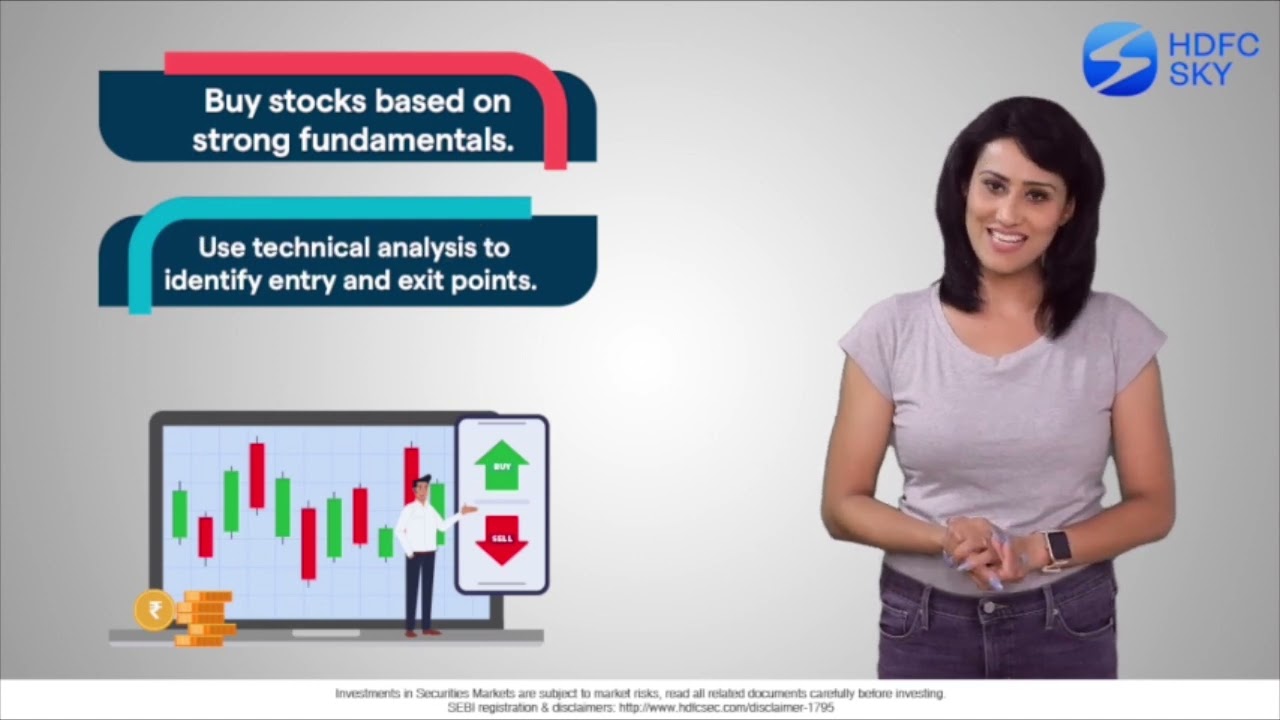
Positional trading is a strategy where traders hold positions for several days to weeks aiming to profit from long-term market trends. Unlike intraday trading or swing trading, positional trading focuses on capturing bigger price movements by analysing fundamental and technical indicators over an extended period. This approach suits investors looking for less frequent trades but steady gains.
What is Positional Trading?
Positional trading meaning refers to a trading strategy where investors hold stocks or other securities for a longer duration, typically weeks to months. This approach focuses on capitalising on major market trends rather than short-term price fluctuations, allowing traders to benefit from sustained price movements while minimising frequent buying and selling.
For example, a positional trader might find a stock priced at ₹100 that has shown strong momentum rising steadily over the past few months. Using technical analysis, they predict it could reach ₹150. They decide to invest expecting the trend to continue and provide a profitable return.
Importance of Positional Trading
Positional trading allows traders to benefit from medium- to long-term market trends without daily monitoring. Here’s why it matters:
- Reduces Noise: Filters out short-term market fluctuations.
- Saves Time: Requires less frequent trading and analysis.
- Captures Bigger Moves: Focuses on long-term price movements for potentially larger profits.
- Lower Transaction Costs: Fewer trades mean reduced brokerage and fees.
- Less Stressful: Ideal for those with limited time or who prefer a calmer approach to trading.
Types of Positional Trading
Positional trading includes various styles based on strategy and time horizon. Here are the main types:
- Trend Trading: Involves holding positions in the direction of the market trend for weeks or months.
- Swing Trading: Aims to capture short- to medium-term gains by holding trades for a few days to weeks.
- Breakout Trading: Traders enter a position when the price breaks above resistance or below support.
- Reversal Trading: Focuses on identifying market turning points to profit from trend reversals.
- Dividend Investing: Long-term strategy focusing on stocks that offer regular dividend payouts.
How to Select Stocks for Positional Trading
Choosing the right stocks is crucial for successful positional trading. Here are key factors to consider:
- Strong Fundamentals: Look for companies with solid earnings, low debt and good management.
- Price Trends: Choose stocks showing a clear upward or downward trend with consistent price movement.
- Volume Analysis: High trading volumes often confirm the strength of a price move.
- Support and Resistance Levels: Identify stocks near key breakout or support zones for better entry points.
- Sector Performance: Favor stocks in outperforming sectors or those expected to benefit from economic trends.
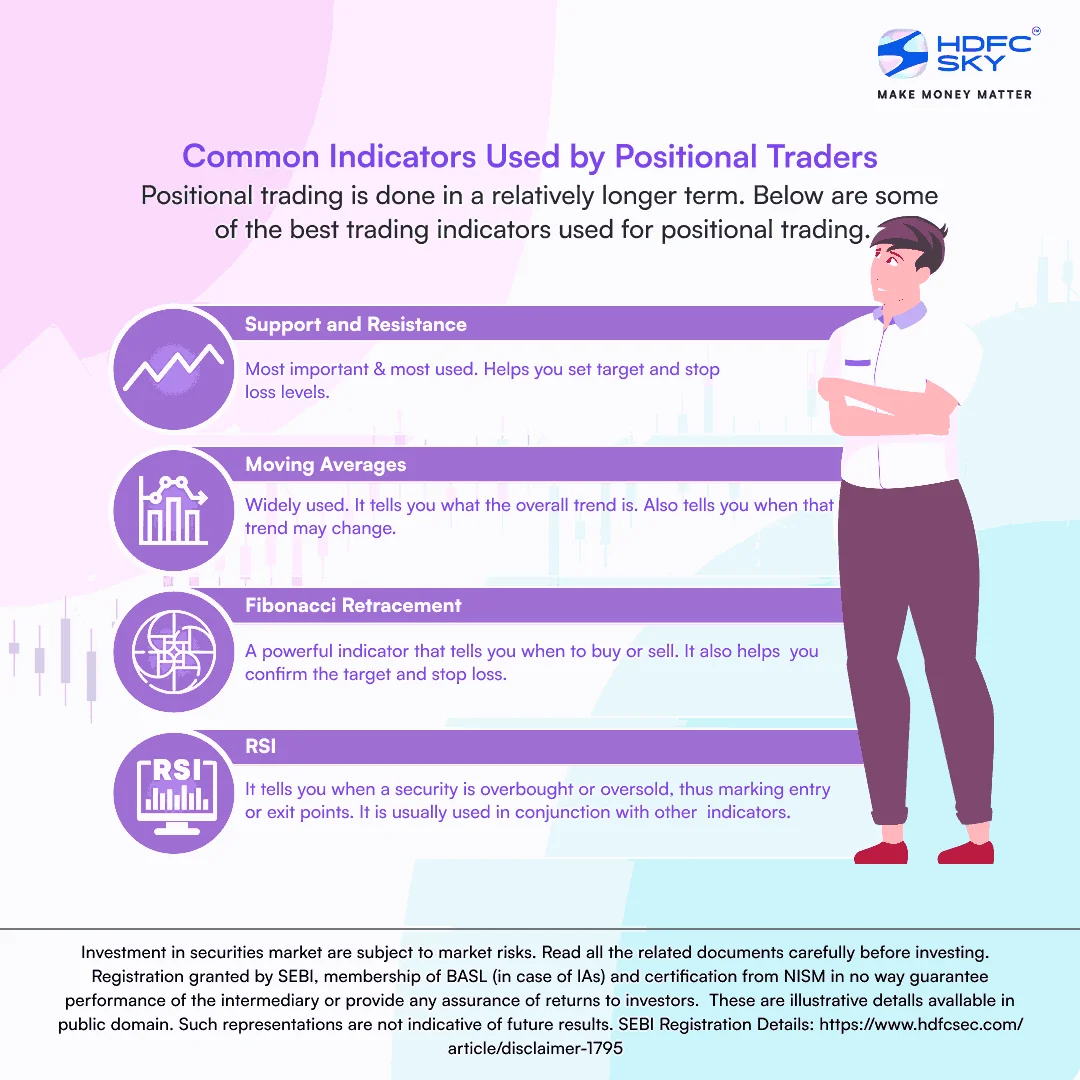
- Technical Indicators: Use moving averages, RSI, MACD, etc., to time your entry and exit effectively.
Positional Trading Strategies
As a positional trader, you look to benefit from medium-term market trends. You patiently wait for your trades to progress, identifying opportunities when prices for certain positional trading stocks are likely to make a significant jump.
Here are some popular position trading strategies used by traders, along with detailed explanations and positional trading examples:
1. Support and Resistance
This strategy involves identifying key price levels where a stock has historically found support (stopped falling) or resistance (stopped rising). Traders look for opportunities to buy near support levels and sell near resistance levels, anticipating that these historical patterns will repeat. To leverage this strategy, you must know how to use stop loss in positional trading.
For example, if a stock has repeatedly bounced off the ₹500 level, a positional trader might see this as a strong support level. They could place a buy order slightly above ₹500 and set a stop-loss order at ₹480 to limit potential losses, expecting the stock to rise from this support.
2. Breakout Strategy
Breakout traders watch for stocks that break through significant support or resistance levels with high volumes. They enter positions when the stock price moves beyond these levels, expecting the momentum to continue in the breakout direction.
Here is a positional trading example for you: imagine a stock has been stuck between ₹100 and ₹120 for ages. Suddenly, it shoots up past ₹120 with lots of people buying. That is your cue to jump in and ride the wave up!
3. Range Trading
It is one of the popular positional stock trading strategies. Range trading involves identifying stocks that are trading within a specific price range. Traders buy near the lower end of the range and sell near the upper end profiting from the stock’s movements within the established boundaries.
Let’s say you notice a stock that keeps bouncing between ₹80 and ₹100. You could buy when it is near ₹80 (the bottom of the swing) and sell when it gets close to ₹100 (the top). If you are right, you could do this over and over, making a profit each time.
4. 50-day Moving Average Trading
This strategy uses the 50-day moving average as a key indicator. Traders might buy when the stock price crosses above the 50-day moving average and sell when it falls below, using this as a signal for potential trend changes.
Here is how it works: if a stock price goes above this average line, it might be the start of an upward trend. That is your signal to buy. If it drops below, it could be the beginning of a downward trend, so you might want to sell.
For example, if a stock’s 50-day moving average is ₹200 and the current price rises to ₹210, a trader might buy, anticipating an upward trend. Conversely, if it falls to ₹190, they might sell.
5. Pullback and Retracement Strategy
This is a strategy in which traders want to identify short-term price reversals (pullbacks) that fall within a long-term trend. They look to take positions on these dips, believing that the underlying trend will take back the reins and allow for potential profits.
For instance, if a stock has been trending upwards and temporarily drops from ₹150 to ₹140, a trader might buy during this pullback, expecting the stock to resume its upward trend and rise above ₹150 again.
Advantages of Positional Trading
Positional trading is ideal for those who prefer long-term strategies and want to benefit from broader market trends.
- Less Time-Intensive: Requires minimal daily monitoring compared to day trading.
- Captures Long-Term Trends: Enables traders to benefit from major market movements over weeks or months.
- Lower Transaction Costs: Fewer trades mean reduced brokerage and other trading fees.
- Less Emotional Stress: Minimises the pressure of short-term market fluctuations.
- Potential for Higher Returns: Long holding periods can result in significant gains if trends play out favorably.
Disadvantages of Positional Trading
Positional trading requires patience and a strong understanding of market trends, but it also comes with some drawbacks.
- Requires Longer Holding Period: Investors may need to wait weeks or months to realise profits, which can tie up capital.
- Market Risk Exposure: Longer holding increases exposure to sudden market downturns or adverse news.
- Requires Discipline: Traders must avoid emotional reactions to short-term volatility to stick to their strategy.
- Overnight Risks: Positions held overnight are vulnerable to after-hours market movements.
- Lower Frequency of Trades: Fewer trades mean fewer opportunities for quick gains compared to day trading or swing trading.
Passive Investors vs Position Traders
Now, you might be wondering, “How is this different from just being a long-term passive investor?” Let’s break it down:
| Passive Investors | Position Traders |
| Take positions for years or decades | Hold positions for days or weeks or months |
| Focusing on dividend income and long-term growth | Aim to potentially profit from medium-term price movements |
| Do not make trades and prefer a buy-and-hold strategy | Actively monitor market trends and adjust positions accordingly |
| Use a lot of fundamentals and general market conditions | Use a combination of technical and fundamental analysis |
| Keep money in index funds or blue-chip stocks | Often trade a variety of stocks, including growth stocks and sector-specific plays |
Is Position Trading Right for You?
Determining if position trading suits your investment style depends on several factors:
- Time Commitment: Positional trading demands regular research and monitoring of positions. Although it’s less intensive than day trading, it still requires consistent market analysis and management.
- Risk Tolerance: Be prepared to hold positions through short-term market volatility. Positional trading often involves larger price swings, which might be challenging for risk-averse investors.
- Capital Availability: Ensure you have enough capital to take meaningful positions and withstand potential drawdowns. Larger position sizes are often necessary to achieve worthwhile profits in positional trading.
- Market Knowledge: A solid understanding of technical and fundamental analysis is crucial for identifying trading opportunities. Successful positional trading relies on these market analysis skills.
- Temperament: Patience and discipline are essential for positional trading. You must stick to your plan, even when the share market temporarily moves against you.
Conclusion
Remember, success in positional trading is not just about picking the right stocks. It is about having a solid plan managing your risks and having the discipline to stick to your strategy even when the market throws you a curveball. You also need to closely monitor the different indicators for positional trading to make informed decisions.
As with any type of trading or investing, start small and learn as you go. Paper trade (trading with pretend money) to test your strategies before you put real cash on the line. And always keep learning. The market’s constantly changing and the good traders are the ones who can adapt.
Related Articles
FAQs on What is Positional Trading?
Which time frame is suitable for position trading?
Most positional traders look at daily or weekly charts. You typically hold your trades for a few days to a few months. Some traders also use 4-hour charts to fine-tune their entry and exit points. It depends on your specific strategy and what is happening in the market.
What are the primary benefits of position trading?
The main advantages of position trading include the potential for larger profits from significant price movements, lower stress compared to day trading, reduced transaction costs, and the ability to capture medium-term market trends. It also allows for a better work-life balance as it requires less constant market monitoring.
How long do traders hold their positions in position trading?
In positional trading, you will typically hold your positions for a few days to several months. It depends on your strategy, what the market’s doing, and when you hit your profit target or stop-loss. Some trades might even last longer if the trend keeps going strong.
What are the risks involved in position trading?
The main risks include overnight and weekend gaps (such as negative news that could tank your stock), potentially larger losses due to holding positions longer, and having your money tied up in positions when other opportunities arise. Significant market reversals can also hit you hard if you are not careful with your risk management.
How to start position trading?
To start position trading, first, educate yourself about technical and fundamental analysis. Develop a solid trading plan and risk management strategy. Start with paper trading to test your approach. Once comfortable, begin with a small real account and gradually increase your position sizes as you gain experience and confidence.