- Offerings
- Tools & Platforms
Tools & Calculators
- Open API
- Calculators
- SIP Calculator
- CAGR Calculator
- Compound Interest Calculator
- FD Calculator
- RD Calculator
- EPF Calculator
- Retirement Calculator
- HDFC SIP Calculator
- Mutual Fund Return Calculator
- Lumpsum Calculator
- Step Up SIP Calculator
- ETF SIP Calculator
- Brokerage Calculator
- Equity Margin Calculator
- SWP Calculator
- EMI Calculator
- MTF Calculator
- Pricing
- SKY Learn
- Mutual Funds
- Margin Trading
- Financial Planning
- Personal Finance
- Share Trading
- IPO
- Derivatives
- Currencies
- Intraday Trading
- Trading Strategies
- Demat Account
- Commodity
- ETF
What Are Silver Futures? A Beginner’s Guide to Silver Futures Investing
By HDFC SKY | Updated at: Jul 25, 2025 12:59 PM IST
Summary
- Silver futures are standardized contracts traded on exchanges to buy or sell a specified quantity of silver at a predetermined price and date in the future.
- These contracts allow hedgers (like jewelers and manufacturers) to mitigate price risks and speculators to profit from silver price movements.
- Lot size for silver futures in India is typically 30 kg,
with smaller variants like Mini (5 kg) and Micro (1 kg) contracts also available. - Margin requirements apply, meaning traders need to deposit only a portion of the total contract value to enter a position.
- Silver futures are traded on platforms like MCX (Multi Commodity Exchange) in India.
- Contracts are marked-to-market daily, and positions can be squared off or held until expiry for physical delivery.
- Investors use these instruments for portfolio diversification, inflation hedging, and short-term trading strategies.
- Price influences include global demand, industrial usage, inflation data, USD movements, and geopolitical risks.
In India, silver is considered one of the most important precious metal commodities after gold. Investors prefer silver for its auspiciousness, investment potential, and cultural significance. In the past, silver was used as a currency for trading in many parts of the world. Today, this precious metal is primarily used in jewellery, cutlery and other industrial applications.
Can you invest in this metal without, you have entered into a futures contract to buy silver at a future date then you will own silver on the date of expiry of the contract. buying it physically? Yes! With silver futures, you can take a position in silver without having to buy it immediately in the spot market. Silver can sometimes be a safe haven asset against economic risks such as high inflation. It is important to understand silver futures well.
What are Silver Futures?
In silver futures, silver is considered the underlying asset, and the price movement of silver determines the price of the contract. This price change determines the profit or loss of a trader.
The silver futures market in India is operated through the Multi Commodity Exchange (MCX). It allows traders to hedge or gain profits by trading in silver without physically buying it. Futures trading depends on speculation; therefore, you can incur losses if the price of silver goes against your position, which could be a short position (selling) or a long position (buying).
How Silver Futures Investing Works?
Silver futures contracts are agreements to buy or sell silver at a predetermined price on a future date. Buyers expect prices to rise, while sellers see a downside potential from the current price level. Both parties have an obligation to fulfil the terms of the contract on the predetermined future date.
The silver futures price will fluctuate based on the price of the underlying asset, which is silver.
Different Silver Futures Contracts Available in MCX
There are four different variants of silver future contracts that you can trade in on MCX.
| Contracts | Lot Size | Expiry |
| Silver Futures | 30 kgs | 5th day of the expiry month |
| Silver Mini-Futures | 5 kgs | Last day of the expiry month |
| Silver Micro Futures | 1 kg | Last day of the expiry month |
| Silver 1000 | 1 kg | Last day of the expiry month |
These four silver futures are different in terms of their margin requirements and lot size. With a 30 kg lot size, the Silver Futures contract is suitable for investors with significant capital or institutional investors.
With 1 kg and 5 kg lot sizes, Silver Micro Futures and Silver Mini-Futures allow retail investors to enter with lower investment amounts and risks. Among these 4 contracts, the Silver Mini Futures (5 kgs) and the Silver Futures (30 kgs) are traded most actively on MCX.
Pros and Cons of Silver Futures
Trading in silver futures is linked to the market, and hence it can deliver either profits or losses. Let’s know the pros and cons of silver futures investing:
Pros of Silver Futures:
These are the benefits of trading and investing in silver futures:
- Demand for Silver: Besides being a precious metal used in jewelry, Silver is used in various industrial applications, such as electronics, solar panels, and medical devices. This increases the demand and overall market value of silver.
- Scope for Small Investors: Even smaller investors can access silver futures as they come in various contract sizes, including 1 kg, 5 kg, and 30 kg. You don’t need to hold your silver futures until the contract expires.
- Leverage Options: This means you can trade in a larger amount of silver with a smaller investment. Let’s understand this with an example: If the margin is 5% and you wish to trade futures worth ₹10 lakh, you have to pay ₹50,000 as the margin.
- Flexibility in Trading: You can even short-sell silver futures. This means you can sell silver that you do not currently own with the expectation of buying it back at a lower price in the future. This allows us to make profits in downside market trends.
- Safe Haven Investment: Silver is viewed as a “safe haven” investment, similar to gold. During times of economic uncertainty or inflation, investors prefer silver.
- Liquidity: Silver markets are generally liquid, and it is relatively easy to buy and sell silver without significantly affecting its price. This liquidity makes silver trading and investing an attractive option for both individual and institutional investors.
Cons of Silver Futures:
Here are the main disadvantages of investing in silver futures:
- Volatility: Silver prices may sometimes be highly volatile, which can create both profit opportunities and losses. Rapid price changes can lead to considerable losses, especially if you are using leverage.
- Futures Trading Complexity: The derivatives trading market is complex. Before you trade in silver futures, it is necessary to have a clear understanding of the market, margin requirements, and specific contract details. Without sufficient experience and guidance, new traders may find this complex and challenging.
- Leverage Risks: While leverage can enhance potential profits, it also increases the risk of losses. You can suffer significant losses if the price movements go against your trading position. You would need to close your position if you want to book profits or the price is not in your favour.
Silver Demand and Price Changes
To learn how silver futures investing works, you need to have a clear understanding of how the silver price and demand change.
After gold, silver is the most attractive precious metal commodity. During economic uncertainties, many investors exit from the equity market and invest in precious metals such as gold and silver to safeguard their portfolios.
Investors and traders also use silver futures to hedge against inflation, as the price usually goes up when there is inflation in the market. Many factors affect the price and demand of silver in India, such as:
-
Monsoon
The monsoon has a significant effect on the demand and price of silver. A good monsoon helps improve agricultural productivity and increase farmers’ incomes. It boosts demand for silver.
Conversely, a poor monsoon results in reduced incomes and lower spending on non-essentials like silver. Therefore, monitoring monsoon forecasts is essential to analyse the trends in silver futures in India.
-
War or Civil Unrest
During times of uncertainty, such as war or civil unrest, silver demand often increases as people prefer safe-haven assets. Silver is portable, does not require documentation, and is universally accepted. This makes it an attractive option for individuals during such conditions.
The stability and price of silver assure individuals that they can invest in or hold onto this precious metal as a safeguard against economic instability.
-
US Dollar
The US dollar exchange rate against other currencies may also influence the silver futures market.
How to Trade with Silver Futures?
Do you know how to invest in silver futures? In India, there is a significant demand for silver investment. However, with physical silver, there are certain challenges, such as purity and chances of theft. In this case, silver futures can be a better alternative for your needs.
These futures are traded on global commodity exchanges like the New York Mercantile Exchange (NYMEX) and the Tokyo Commodity Exchange (TOCOM). In India, the Multi Commodity Exchange (MCX) is the place for investing in silver futures. You can also trade silver options here.
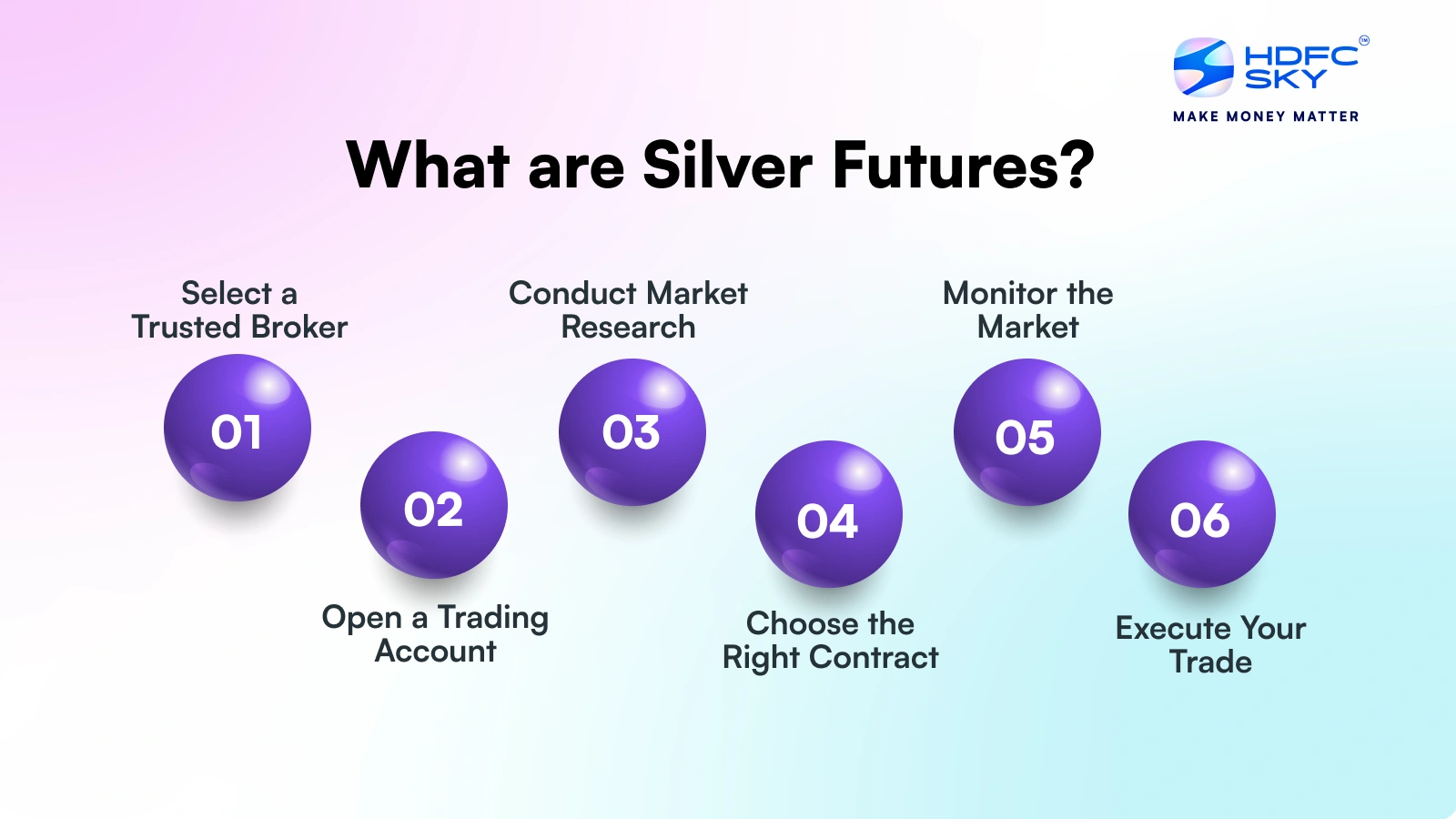
These are the steps to trade with silver futures:
- Select a Trusted Broker: First, you should choose a well-established broker registered with the commodity exchange that offers silver futures trading. Also, check the user interface of the trading platform so that you can easily execute your trades.
- Open a Trading Account: Set up a demat and trading account with the selected broker. Complete the account opening process with the necessary information and complete the required documentation. The broker may ask for additional documents for F&O trading activation.
- Conduct Market Research: You should always stay informed about the global economic trends and market sentiments that influence silver prices to make informed decisions.
- Choose the Right Contract: Select a silver futures contract based on your market analysis and check the expiry date and trading volume before placing a trade.
- Execute Your Trade: Place your trade according to your strategy by entering the quantity, contract details, order type, etc.
- Monitor the Market: Keep an eye on market movements and set stop-loss orders to manage risks effectively.
Risks of Silver Trading
Silver futures are a derivative contract where the underlying asset is the precious metal itself. So, let’s go through the risks of trading in silver:
-
Price Risk
The value of silver can fluctuate significantly due to market conditions, macroeconomic factors, and investor sentiment. In such scenarios, the selling price can be lower than the buying price, which may lead to potential losses. This volatility is often greater for silver than for gold, which makes it a riskier asset in terms of price stability.
-
Currency Risk
Silver in international spot market is typically priced in US dollars, which exposes investors to currency risk if they purchase silver using a different currency, such as the rupee (₹). Fluctuations in exchange rates can affect the overall value of your investment and lead to losses when you convert them to your home currency.
-
Trading Disruptions
Market disruptions can occur due to various reasons, such as regulatory bans or operational issues within trading platforms. Such disruptions can prevent you from buying or selling actions, and it may limit your ability to respond to market changes.
Conclusion
Hopefully, at this point, you have a clear understanding of silver futures, how it works, the risks and opportunities involved and other important factors. Trading silver futures offers opportunities for speculation and hedging against price fluctuations. However, careful analysis and risk management are required due to market volatility and the complexities of futures contracts.
Related Articles
FAQs on What are Silver Futures?
If I purchase a silver futures contract, does it mean I own the silver?
If you have entered into a futures contract to buy silver at a future date then you will own silver on the date of expiry of the contract.
What is the meaning of silver and gold futures?
Silver and gold futures are both derivatives contracts in the commodity market. Buyers and sellers trade these contracts at a predetermined price, quantity and expiry date. Depending on the price movements of the underlying asset, the buyer or seller makes profits, while the other party experiences losses.
How do silver futures differ from silver ETFs?
Silver ETFs are funds that are listed on stock exchanges and that invest in silver. You can invest indirectly in silver through these funds. They are not derivatives contracts unlike futures.
What are the trading hours for silver futures?
Silver trading time in India in the Multi-Commodity Exchange (MCX) for silver futures is from 9:00 am to 11:30 pm IST, Monday to Friday. The closing hours can extend up to 11:55 pm.
Can I take physical delivery of silver through futures trading?
Yes, you can take physical delivery of silver through futures trading on MCX. However, you must meet the contract specifications and delivery procedures.
Who decides the rate of silver?
The rate or price of silver is determined by the market factors of supply and demand.