- Offerings
- Tools & Platforms
Tools & Calculators
- Open API
- Calculators
- SIP Calculator
- CAGR Calculator
- Compound Interest Calculator
- FD Calculator
- RD Calculator
- EPF Calculator
- Retirement Calculator
- HDFC SIP Calculator
- Mutual Fund Return Calculator
- Lumpsum Calculator
- Step Up SIP Calculator
- ETF SIP Calculator
- Brokerage Calculator
- Equity Margin Calculator
- SWP Calculator
- EMI Calculator
- MTF Calculator
- Pricing
- SKY Learn
- Mutual Funds
- Margin Trading
- Financial Planning
- Personal Finance
- Share Trading
- IPO
- Derivatives
- Currencies
- Intraday Trading
- Trading Strategies
- Demat Account
- Commodity
- ETF
Equity Trading: Start Stock Market Trading Online
Elevate your trading & investment with our tailored equity trading solutions


Stock market trading involves buying and selling shares of publicly listed companies on stock exchanges. Shares are units of ownership in a company. When you buy shares, you own a portion of that company and have a claim on its assets and earnings. Shares are traded on stock exchanges, and their value can fluctuate based on the company’s performance and market conditions. Traders aim to profit from price fluctuations by purchasing stocks at a lower price and selling them at a higher price.
Equity Trading with HDFC Sky
3500 Listed Companies and 100 ETFs
Pay Zero Brokerage for all delivery trades*
Trade in F&O & Commodities

Trade in F&O & Commodities
Set and manage alerts for specific stock price points
Loan against shares
Other value-added services
How Does Equity Trading Works at HDFC Sky?
Open Your Demat Account with HDFC Sky
Add Funds to your HDFC Sky Account
Select Stock from Research Recommendation
Place Your Buy/Sell Order on Web or App
Order Executed
Settlement (T+1) Day
Open Your Demat Account with HDFC Sky
Add Funds to your HDFC Sky Account
Select Stock from Research Recommendation
Place Your Buy/Sell Order on Web or App
Order Executed
Settlement (T+1) Day
 Pricing
Online Equity Trading Charges with HDFC Sky
Discover our transparent and competitive equity trading charges.
Delivery Order
₹20 or 2.5% (Whichever is Lower)
Intraday Order
₹20 or 2.5% (Whichever is Lower)
Benefits of Trading on Equity

Potential for High Returns
Capitalize on market movements for substantial investment opportunities.

Dividend Income
Get a stream of income in the form of dividends

Ownership in Companies
Gain fractional ownership in your selected publicly traded companies.

Liquidity
Buy and sell stocks quickly in response to market changes.

Diversification
Trade across various sectors to balance your stock portfolio.

Market Insights
Develop trading skills by analyzing stock market trends daily.

Capital Appreciation
Benefit from long-term stock value growth through strategic trades.

Flexibility in Trading Strategies
Adapt your equity trading approach as market conditions shift.
Potential for High Returns
Capitalize on market movements for substantial investment opportunities.
Dividend Income
Get a stream of income in the form of dividends
Ownership in Companies
Gain fractional ownership in your selected publicly traded companies.
Liquidity
Buy and sell stocks quickly in response to market changes.
Diversification
Trade across various sectors to balance your stock portfolio.
Market Insights
Develop trading skills by analyzing stock market trends daily.
Capital Appreciation
Benefit from long-term stock value growth through strategic trades.
Flexibility in Trading Strategies
Adapt your equity trading approach as market conditions shift.
Complete Overview of Equity Trading
Discover the essentials of equity trading by watching our informative videos. Our step-by-step tutorials cover everything you need to know, from understanding stock market fundamentals and analyzing stock performance to executing trades, managing your portfolio, and refining your trading strategies. Ideal for both newcomers and experienced traders, our videos provide expert insights, practical tips, and real-world examples to enhance your trading skills and maximize your investment potential.
From Origins of BSE to The Digital Age: Equity Trading
Equity trading in India has its own history. This journey started with the Bombay Stock Exchange (BSE) starting under a Banyan Tree. Fast forward to today, and India’s equity market has transitioned into a sophisticated digital landscape, largely thanks to pivotal milestones like incorporation of the National Stock Exchange (NSE) in 1992, introduction of dematerialized accounts in 1996, and fully automated, screen-based trading in 1994.
This move replaced the traditional open outcry system with a more efficient and transparent electronic platform, allowing for quicker transactions, reduced errors, and greater access to market information for all participants. This shift democratized trading by making it more accessible to a broader range of investors across the country.
The Indian equity market is dynamic. The market has undergone global financial storms, like the 2008 crisis, and yet, stood strong. India’s stock exchanges are renowned for their speed and efficiency. This rapid pace, coupled with a high rate of retail investor participation, highlights the market’s accessibility and democratic nature.
Understanding equity trading helps in navigating the financial landscape effectively. As the Indian stock market continues to evolve, it presents unique opportunities for wealth creation and financial growth. Knowledge of equity trading will help you to make informed investment decisions, manage risks, and capitalize on market trends.
What is Equity Trading?
Equity trading is the act of buying and selling shares of companies. These shares represent ownership in a company, giving you a stake in its successes (and, sometimes, its setbacks). You may wonder: why should one be concerned with equity trading? It’s one of the most effective ways to build wealth over time. Today’s equity trading is open to anyone with a bit of capital and an internet connection. When you buy shares, you’re buying into a company’s potential. Your returns come from two main sources: capital gains and dividends. Capital gains are the profits made when you sell a stock for more than you paid for it. Dividends are regular payouts companies make to shareholders from their profits. But there are also certain risks involved. The stock market can be unpredictable, with prices influenced by everything from corporate earnings to global events. This volatility is what makes equity trading both exciting and challenging.
Terms Related to Equity Trading:
If you’re looking to invest and grow your portfolio in through equity trading, do learn the fundamental terms associated with this ecosystem.
- Stock Exchange: A marketplace where stocks are bought and sold, such as the Bombay Stock Exchange (BSE) or the National Stock Exchange (NSE).
- Equity: Represents ownership in a company, giving shareholders a claim on part of the company’s assets and earnings.
- Shares: Units of ownership in a company. They are also known as stocks or scrips.
- Portfolio: A set of investments owned by an individual or institution.
- Capital Gains:The profit made from selling an investment for more than its purchase price.
- Dividends: Regular payments made by a company to its shareholders out of its profits.
- Bull Market: A market condition where stock prices are rising or are expected to rise.
- Bear Market: A market condition where stock prices are falling or are expected to fall.
- Volatility: The degree of rise and fall in stock prices over a period of time, indicating the level of risk.
- Blue Chip Stocks:Shares of large, well-established, and financially sound companies with a history of reliable performance.
- IPO (Initial Public Offering): The process through which a company offers its shares to the public for the first time.
- Market Order: An order to buy or sell a stock immediately at the current market price.
- Limit Order:An order to buy or sell a stock at a specific price.
- Stop-Loss Order: An order placed to sell a stock when it reaches a certain price, used to limit potential losses.
- Intra-Day Trading: Buying and selling stocks within the same trading day.
- Swing Trading: Holding stocks for several days or weeks to profit from expected price changes.
- Margin Trading: Borrowing money from a broker to buy stocks, allowing for larger investments with less personal capital.
- Short Selling:Borrowing stocks and selling them, with the intention of buying them back later at a lower price.
- Bid Price: The highest price a buyer is willing to pay for a stock.
- Ask Price: The lowest price a seller is willing to accept for a stock.
- Spread: The difference between the bid price and the ask price.
- Liquidity: The ease with which a stock can be bought or sold in the market without affecting its price.
- P/E Ratio (Price-to-Earnings Ratio): A valuation metric that compares a company’s current share price to its earnings per share.
- Index: A benchmark that tracks the performance of a group of stocks, such as the Nifty 50 or the SENSEX.
Benefits of Trading on Equity:
Equity trading is not just about buying and selling shares, it is about participating in the growth story of businesses, economies, and innovations. The key advantages associated with equity trading are:
- Flexibility and Control: Equity trading offers flexibility. Unlike fixed deposits or irredeemable bonds with fixed closing dates, you can buy and sell shares at your discretion, responding quickly to market changes. With this control, you can alter your investment plan as necessary to fit your financial objectives and risk tolerance.
- Diversification Opportunities: You can diversify your investment portfolio by investing in stocks/ By diversifying their investments across various sectors, investors can mitigate the impact of underperformance in any single area. This diversification strategy not only enhances the overall stability and long-term growth potential of an investment portfolio but also helps in managing risk effectively.
- Liquidity: One of the key benefits of equity trading is liquidity. Listed Stocks, especially those of larger companies, can be quickly converted to cash, providing easy access to your money when needed. This liquidity is especially valuable during emergencies or when you need to take up any new investment opportunities swiftly.
- Transparency and Information Access: Information is vital to the stock market . Listed businesses or companies have to publicly disclose their financial performance at the end of every quarter. You can accurately follow your assets, thanks to this transparency, which also helps to build confidence.
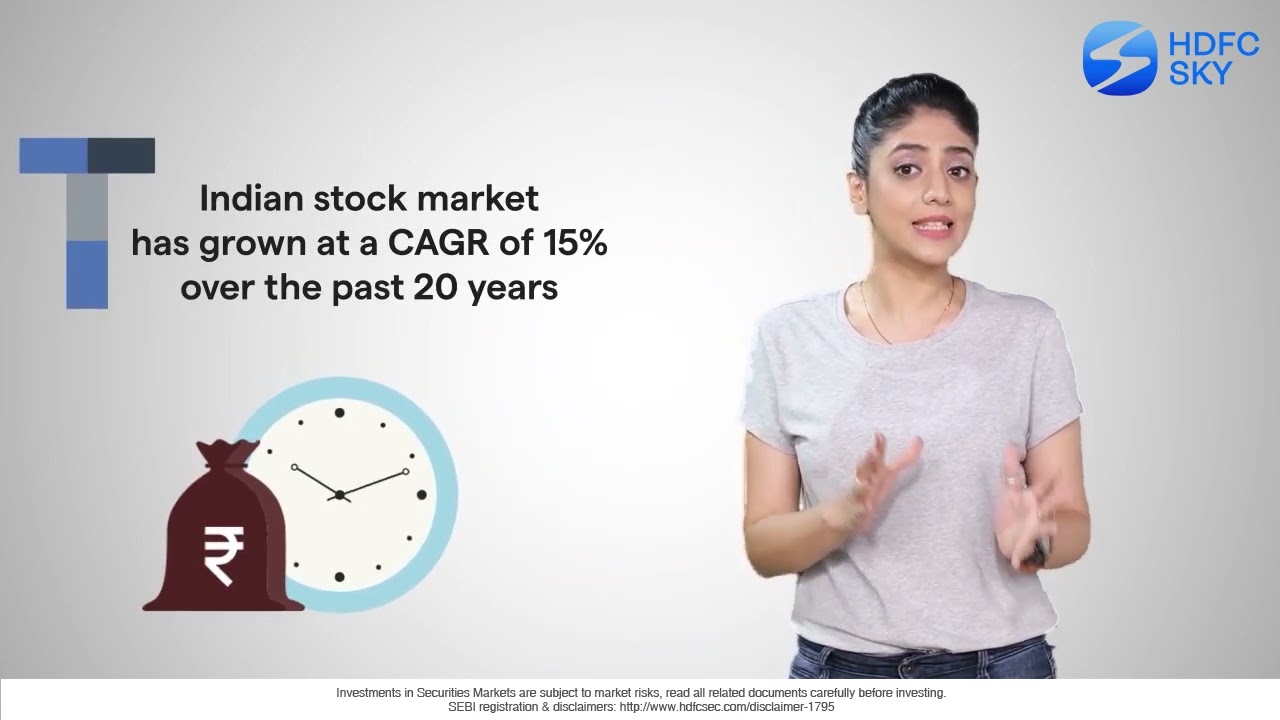
- Potential for High Returns: Equity trading offers high return potential and substantial long-term growth, though it carries higher risks compared to traditional savings. Over the last 20 years, the Nifty 50 index has delivered a compound annual growth rate (CAGR) of approximately 15%, significantly outperforming traditional savings instruments. During this period, 83% of the time, investments in Indian equities yielded returns exceeding 10% when held for a minimum of seven years.
- Tax Efficiency: In India, long-term capital gains from equities held for more than a year are taxed at 12.5% on gains exceeding ₹1.25 lakh. Additionally, dividend incomes are taxed at as per income slab in a financial year, without indexation benefits.
- Be Part of the Innovation Journey: When you trade into equities, you’re not just investing in a company; you’re investing in ideas, innovations, and the future. Once you buy shares, you may become a shareholder in a company. It allows you to be part of the growth and innovation trajectory of a company right from the onset.
- Personal Growth and Learning: Equity trading is a continuous learning journey. Engaging with the market sharpens your financial knowledge, enhances your understanding of economic indicators, and keeps you up with the global events. This knowledge not only helps in trading but also in making smarter financial decisions overall.
Who is Eligible for Equity Trading?
To be eligible for equity trading in India, an individual or a company must meet certain criteria:
- Age Requirement: Must be at least 18 years old.
- Identification: Valid identification documents, such as a PAN card and Aadhaar card, are required for opening a demat & trading account.
- Bank Account: A linked bank account to your trading account is necessary for executing your transactions.
- Trading Account: Must open a trading and demat account with a registered broker.
Equity Trading Insights for Beginners
Entering the world of equity trading may be both thrilling and intimidating, particularly for beginners. With so many options, opinions and techniques at your disposal, it’s critical to select the one that best fits your investing objectives, risk tolerance, and level of market expertise.
- Blue-Chip Stocks: Blue-chip stocks represent shares of well-established companies with a good track record of performance and stability. These companies often lead their respective industries and offer consistent dividends. For beginners, investing in blue-chip stocks is a safer option due to their lower volatility and potential for steady returns.
- Exchange-Traded Funds (ETFs): ETFs make for a great entry point for new investors. They allow you to invest in a basket of stocks, providing diversification with a single purchase. Moreover, the fund is managed by professionals, hence it is relatively safer. Also, this reduces the risk associated with investing in individual stocks and is a cost-effective way to gain exposure to various sectors and indices.
- Index Funds: Index funds track the performance of a specific market index, such as the Nifty 50 or Sensex. These funds are passively managed, which means lower fees compared to actively managed funds. Beginners benefit from the broad market exposure and reduced risk associated with diversified investments.
- Dividend Stocks: Investing in dividend-paying stocks can provide a steady income stream along with potential capital appreciation. These stocks belong to companies that share their profits with shareholders regularly. Beginners can benefit from the dual advantage of earning dividends and potentially seeing stock price growth.
Why Start with These Options?
Many people would suggest many things but starting off with these options would land you in a safer terrain because they come with:
- Lower Risk: Blue-chip stocks, ETFs, index funds, etc. offer lower risk compared to individual stocks.
- Diversification: These options allow beginners to diversify their investment across multiple sectors and companies. This reduces the impact of the poor performance of a single stock.
- Professional Management: ETFs or mutual funds managed by professionals, giving beginners access to expert investment strategies. However, this would not mean that you would not do your own market research. Your research would simply be aided by the professional.
Starting with these beginner-friendly options for equity trading would offer a stable and growth-oriented combination. However, before making any financial decisions, always remember to do extensive research, comprehend your investing objectives, and take your risk tolerance into account.
Which type of Equity trading is safe?
Equity trading can seem daunting if you don’t know where you’re going. Hence, it is advised to look out for long-term investing options. You should have a clear idea of your risk tolerance and investment goals while doing equity trading.
Key Aspects of Long-Term Equity Investing:
- Objective: The primary goal is to capture the growth of companies and the market over a long horizon, rather than seeking quick profits from short-term price movements.
- Strategy: Invest in well-established companies with strong fundamentals and growth potential. This approach focuses on capitalizing on substantial long-term capital gains.
Advantages of long-term investing:
- Compounding Returns: Reinvested earnings generate additional returns over time.
- Reduced Impact from Market Fluctuations: Long-term holding minimizes the effect of short-term volatility.
- Lower Transaction Costs: Infrequent trading reduces transaction fees.
Considerations:
- Patience and Discipline: Success in long-term investing requires patience and the ability to endure market ups and downs.
- Risk Management: Although long-term investing is generally safer, it still involves risk. The stock market can be unpredictable, and no returns are guaranteed. Research and understanding of investments are crucial.
- Informed Decisions: Utilize financial news, market analyses, and expert opinions to guide your choices.
Maintaining Composure:
Whether you are new to equity trading or an experienced investor, it’s important to stay calm. Market fluctuations are normal, and impulsive decisions based on short-term movements can be detrimental. Stick to your long-term strategy and rely on your knowledge and patience to guide your investments.
Guide for Traders on Equity
- Educate Yourself Thoroughly: Establishing a solid knowledge base is essential before beginning to trade. Learn the fundamentals of trading strategies, investment principles, and financial markets. Study books, enroll in online programs, and keep up with reliable financial news sources. Gaining knowledge of trading principles and the fundamental elements affecting markets will enable you to make wiser choices and steer clear of costly errors.
- Develop a Trading Plan: The key to success in trading is having a well-organized plan. Establish your trading objectives, risk tolerance, and entry and exit tactics. Describe your portfolio management strategy, including stop-loss levels and position sizing. A trading plan acts as a road map to help you maintain concentration and discipline, particularly in times of market volatility.
- Start Small and Scale Gradually: Begin with a small amount of capital and low-risk trades. With this strategy, you can get experience without taking a big financial risk. You can progressively increase your trading capital and position sizes as you gain familiarity and expertise. Scaling gradually reduces risk and helps you prevent potentially significant losses at the beginning of your trading career.
- Practice with a Demo Account: The majority of brokers allow you to practice trading with virtual money on demo accounts. Take advantage of this chance to become acquainted with the trading platform, experiment with various tactics, and hone your abilities without having to risk real money. Before making real money trades, a demo account offers invaluable practical experience and confidence-boosting support. In India, you can avail this service online as well. Platforms like IFC Markets India, Forex, and Neostox are providing this service that can help you understand the trading world before you even start trading.
- Implement Risk Management: The ability to effectively manage risk is essential for trading success. To reduce possible losses on every transaction, always utilize stop-loss orders. Establish the greatest risk you are willing to take on each trade, and make sure it fits within your total risk tolerance. Effective risk management guards your money and keeps you from making rash decisions when the market is up or down.
- Stay Disciplined and Avoid Emotional Trading: Emotions have the power to impair reason and cause rash actions. Adhere to your trading strategy and refrain from trading out of fear, greed, or conjecture. Strive to maintain the discipline to stick to your goal and avoid chasing losses or going off course.
- Keep a Trading Journal: Maintain a trading journal to record your trades, including entry and exit points, reasons for taking the trade, and outcomes. Analyzing your notebook on a regular basis makes it easier to spot trends, advantages, and disadvantages in your trading strategy. It gives you information on what works and what doesn’t, enabling you to hone your tactics and advance over time.
- Stay Informed and Adapt: The financial markets are dynamic and ever-changing. Keep yourself updated on news stories, economic indicators, and market developments that may affect your trading. Be prepared to modify your plans in response to fresh knowledge and shifting market conditions. To be effective and relevant in trading, one must be flexible and never stop learning.
- Avoid Overtrading: Making too many trades, or overtrading, can raise risk and increase transaction costs. Remain true to your trading strategy and resist the urge to make frequent trades in response to noise in the market or transient changes. Avoid needless deals that could reduce returns and instead concentrate on making high-quality trades that support your plan.
- Seek Mentorship and Networking: Think about joining trading communities or asking more seasoned traders to mentor you. Talking with those who have more experience can yield insightful comments, helpful guidance, and encouragement. By networking with other traders, you can exchange expertise, obtain new insights into trading tactics, and maintain your motivation.
5 Things to Avoid as an Equity Trader
- Overleveraging Your Trades: Overleveraging, or utilizing borrowed funds to enhance the size of trades, is one of the biggest traps for equities traders. Leverage can generate returns, but it can also increase losses. Losses from a losing trade can soon outweigh your initial investment. This elevated risk has the potential to cause serious financial hardship or even margin calls from your broker. Use leverage carefully to prevent this and make sure it fits in with your trading plan and risk tolerance.
- Ignoring Risk Management: In trading, efficient risk management is essential. Significant losses may result from forgetting to place stop-loss orders or from not knowing how much you can lose on a trade. One bad trade has the potential to deplete a sizable percentage of your wealth if risk management is not done properly. To guard against significant losses, you should always utilize stop-loss orders and keep your capital risk low on any given transaction.
- Chasing Losses: It can be appealing to make aggressive transactions in an attempt to recover from a loss as soon as possible; this strategy is known as ‘chasing losses’. This conduct may result in more risk-taking and rash decisions, which could cause even greater losses. Rather, remain disciplined, have patience and adhere to your trading plan. Recognize that trading will inevitably result in losses, and concentrate on patiently carrying out your plan. In the long term, you’ll be able to make better selections if you objectively analyze your trades and absorb lessons from your mistakes.
- Neglecting Market Research and Analysis: Research and analysis must be done thoroughly to trade stocks successfully. Making bad trading judgments can result from relying solely on hearsay or advice without doing your own research. It’s critical to comprehend the underlying principles of the stocks you trade, including market patterns, financial statements, and economic variables that may affect stock prices. Keep up with pertinent news and events and use technical analysis to spot patterns and trends. You may improve your chances of making well-informed trade and better selections by devoting time to study and analysis.
- Overtrading: Making too many trades quickly, or overtrading, can reduce earnings and raise transaction expenses. It frequently results from a desire to profit from every shift in the market or to make up for losses sustained in the past. Because making several trades may lead to chasing the market or responding to short-term changes instead of adhering to a well-thought-out strategy, overtrading can result in poor decision-making. Commit to your trading plan and concentrate on making quality deals that fit your strategy to prevent overtrading.
Learn More About Equity Trading


FAQ's On Equity Stock Trading
What does equity trading mean?
Equity trading refers to the buying and selling of shares or stocks in a company, which represent ownership in that company.
What are the charges of equity trading?
For both delivery orders and intraday orders , HDFC SKY’s brokerage charge is Rs 20 or 2.5% whichever is lower.
How safe is equity trading?
Equity trading carries market risk and other risks. This risk varies from stock to stock.
What is the minimum amount required to start equity trading?
There’s no fixed minimum; you can start with as little as the cost of a single share. However, it’s advisable to invest an amount you’re comfortable risking.
How to trade equities?
You can trade stocks by opening a demat & trading account with a brokerage firm like HDFC SKY.
What are the risks of trading equity?
Market volatility can lead to significant fluctuations in stock prices, resulting in potential losses. Economic factors, such as inflation and interest rate changes, can also impact market performance. Further, geopolitical tensions and domestic political changes may create uncertainty, affecting investor sentiment. Moreover, regulatory changes and high valuations can trigger market corrections. Understanding these risks is crucial for effective equity trading.