- Offerings
- Tools & Platforms
Tools & Calculators
- Open API
- Calculators
- SIP Calculator
- CAGR Calculator
- Compound Interest Calculator
- FD Calculator
- RD Calculator
- EPF Calculator
- Retirement Calculator
- HDFC SIP Calculator
- Mutual Fund Return Calculator
- Lumpsum Calculator
- Step Up SIP Calculator
- ETF SIP Calculator
- Brokerage Calculator
- Equity Margin Calculator
- SWP Calculator
- EMI Calculator
- MTF Calculator
- Pricing
- SKY Learn
- Mutual Funds
- Margin Trading
- Financial Planning
- Personal Finance
- Share Trading
- IPO
- Derivatives
- Currencies
- Intraday Trading
- Trading Strategies
- Demat Account
- Commodity
- ETF
Most convenient and cost-effective Intraday Trading with HDFC SKY
Research, Recommendations and Tools for making better intraday trading decisions

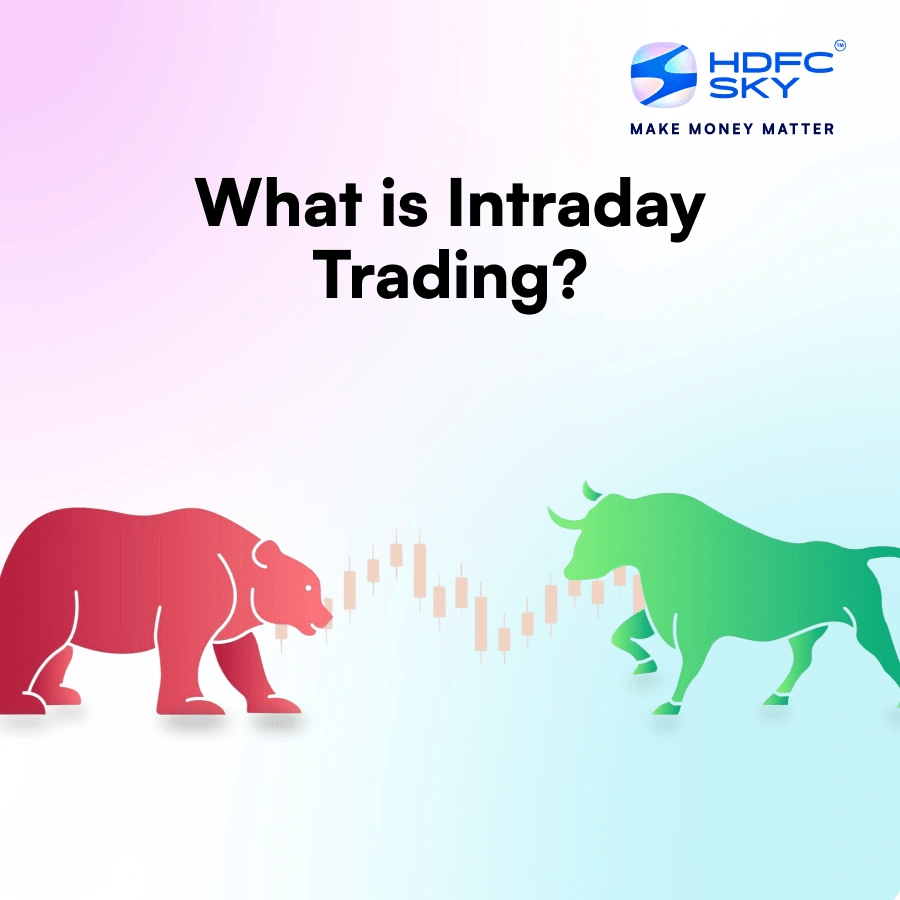
What is Intraday Trading?
Intraday trading is buying and selling stocks or other financial instruments within the same trading day. Traders open and close positions before the market closes, aiming to profit from intraday volatility. The objective is to make profits from short-term price movements without holding positions overnight.
 Time-bound trading
- Buy and sell on the same day
- No risk of overnight exposure
Intraday trading on HDFC SKY
Access to real-time market data
Seamless trade execution on a reliable platform
Transparent and low brokerage charges

Analyze pre-market trends
Identify potential trades
Execute orders swiftly
Monitor positions continuously
Implement stop-loss orders
Take profits at target prices
How Intraday Trading Works at HDFC Sky?
Login to HDFC Sky
Select Stock of Choice
Click on Buy
Enter Stock Quantity
Click on Intraday
Set Price
Check Margin Required
Review Order
Click on Place Buy Order
Order Placed
Login to HDFC Sky
Select Stock of Choice
Click on Buy
Enter Stock Quantity
Click on Intraday
Set Price
Check Margin Required
Review Order
Click on Place Buy Order
Order Placed
Benefits of Intraday Trading

Quick Profits if the price of the stock goes up
You may gain from daily price movements
Leveraged Returns
Trade larger amounts with less capital.
No long term risk
No overnight or long term risks as trades are closed by day's end.
High Liquidity
Relatively easy entry and exit in active stocks.
Brokerage Charges
HDFC SKY charges lower brokerage on intraday transactions
Technical Analysis
Use charts and indicators for decisions and risk management.
Quick Profits if the price of the stock goes up
You may gain from daily price movements
Leveraged Returns
Trade larger amounts with less capital.
No long term risk
No overnight or long term risks as trades are closed by day's end.
High Liquidity
Relatively easy entry and exit in active stocks.
Brokerage Charges
HDFC SKY charges lower brokerage on intraday transactions
Technical Analysis
Use charts and indicators for decisions and risk management.
 Pricing
Competitive Pricing with Transparent Charges
Our pricing model ensures clarity and transparency for intraday traders.
Account Opening Charges
Rs. 0
Intraday Brokerage
Rs. 20 per order or 2.5% of order value (whichever is lower)
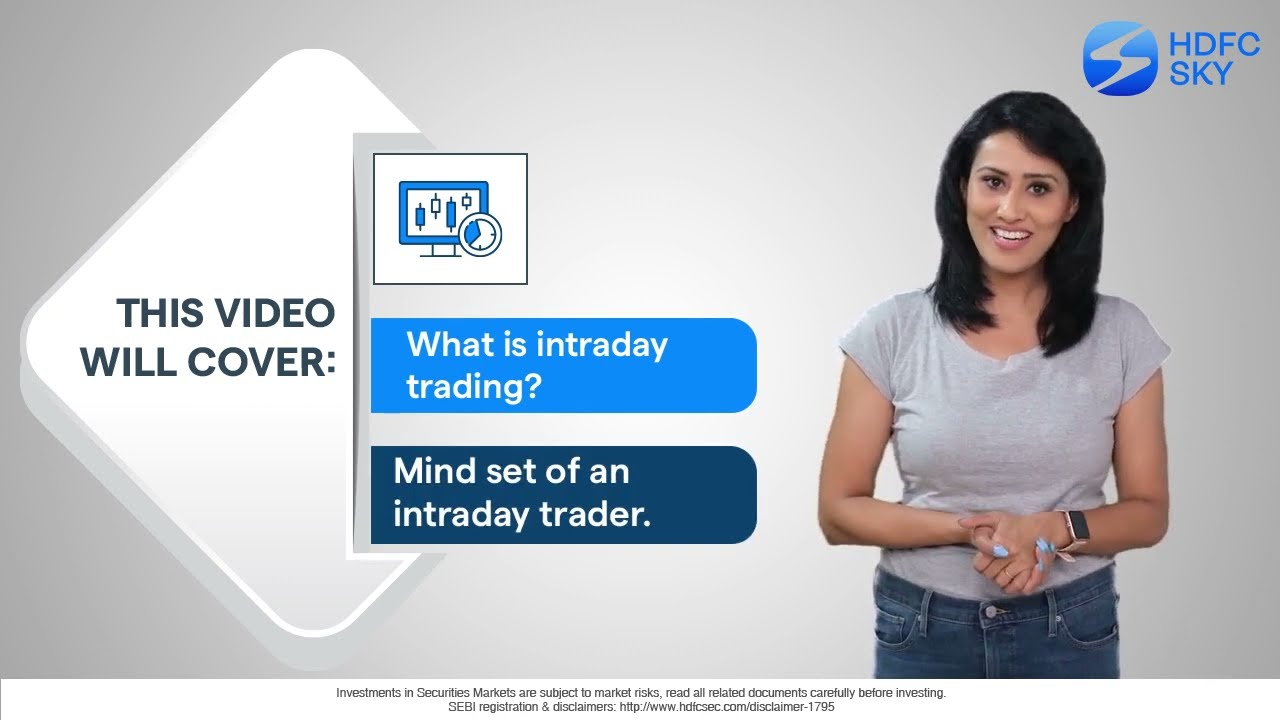
Watch the Video to Better Understand Intraday Trading
Intraday trading demands a deep understanding of the market to help traders make informed decisions. Watch this video to gain a deeper understanding of intraday trading. It covers the key strategies and tools to help you make informed decisions and optimize your trades.
Intraday trading, often called day trading, involves buying and selling financial instruments, such as stocks or commodities, within a single trading day. This type of trading is best suited for those who can monitor market trends and react to short- term fluctuations. Traders capitalize on intra-day price fluctuations, opening and closing positions within a single trading session.
Key characteristics:
- Short holding periods (minutes to hours)
- High trading frequency
- Utilizes technical analysis
- Requires real-time market monitoring
- Involves higher risk and potential returns
Intraday traders typically use leverage to amplify potential gains, but this also increases risk. Successful intraday trading demands discipline, quick decision-making, and effective risk management strategies.
How Does Intraday Trading Work?
Here’s a detailed, step-by-step guide to understanding how intraday trading works:
- Open and Fund a Trading Account: Opening demat account & trading account with a brokerage firm. This account will be used to buy and sell financial assets. Ensure the broker offers the tools and support needed for intraday trading. Deposit funds into your trading account to start trading.
- Choose the right stocks or assets: Traders pick stocks that show volatility and have high liquidity. Volatility means there’s a good chance the price will change, and liquidity ensures you can buy and sell quickly.
- Analyze the Market: Before making any trades, analyze the market. Use tools like charts, historical data, and news updates to understand price trends and market conditions. This analysis helps in making informed trading decisions.
- Develop a Trading Strategy: Create a trading strategy based on your analysis. This could involve identifying entry and exit points, using technical indicators (like moving averages or RSI), and setting stop-loss orders to manage risk.
- Place Your Trades: Execute your trades based on your strategy. Buy assets you expect to rise in price and sell those you expect to fall. Intraday traders often make multiple trades a day to capitalize on small price movements.
- Monitor the Market: Continuously monitor the market throughout the trading day. Prices can fluctuate rapidly, so staying updated on market conditions and news is crucial for making timely decisions.
- Close Your Positions: Before the end of the trading day, close all your positions. Intraday trading requires that you do not hold any positions overnight to avoid overnight risk and potential market gaps.
- Understand Fees and Charges:
Be aware of the brokerage fees, transaction costs, and other charges associated with intraday trading. These costs can impact your overall profitability, so factor them into your trading strategy.
Key Concepts in Intraday Trading:
Liquidity
Liquidity refers to how easily an asset can be bought or sold in the market without affecting its price. High liquidity is crucial for intraday trading because it allows traders to enter and exit positions quickly. Stocks with high trading volumes are ideal as they offer more liquidity.
Volatility
Volatility measures the price fluctuations of an asset. Higher volatility means greater price swings, which can present more trading opportunities. Intraday traders often seek volatile stocks because they offer the potential for significant gains within a single day.
Leverage
Leverage allows traders to control a larger position with a smaller amount of capital. While this can amplify profits, it also increases risk. For intraday traders, leveraging can enable them to take larger positions and potentially earn higher returns, but it’s important to use it cautiously.
Advantages of Intraday Trading
1. Flexibility
Intraday trading offers flexibility as positions are opened and closed within the same day. This allows traders to avoid overnight risk.
2. Potential for High Returns
The potential for high returns exists due to frequent trading opportunities and rapid price movements.
3. No Overnight Risk
By closing positions before the market closes, traders avoid the risk of adverse overnight developments.
4. Leverage Technology
Traders can use advanced trading platforms, like those of HDFC SKY, and tools to analyze market data and execute trades efficiently.
5. Diverse Trading Options
Intraday traders can choose from a wide range of financial instruments, including stocks, currencies, commodities, and derivatives.
6. Immediate Feedback
Traders receive immediate feedback on their trades, allowing for quick adjustments and learning from mistakes.
7. Potential for Strategy Optimization
Frequent trading provides opportunities to refine and optimize trading strategies based on real-time performance.
Disadvantages of Intraday Trading
1. Transaction Costs
Frequent trading can lead to higher transaction costs, including brokerage fees and taxes, which can impact overall profitability.
2. Time-Consuming
The need to monitor the markets closely throughout the day can be time- consuming and demanding.
3. Market Volatility
Intraday trading is susceptible to market volatility, which can increase the risk of unexpected losses.
4. Technical Failures
Dependence on technology means that technical failures, such as internet issues or platform malfunctions, can impact trading performance.
5. Short-Term Focus
Intraday trading requires a short-term focus, which may not align with long-term investment goals or strategies.
Understanding Indicators for Intraday Trading
Technical indicators are tools used to analyze price movements and market trends. Here’s a simplified explanation of key indicators:
Moving Averages (MA)
Moving Averages smooth out price data over a specific period to identify trends. For example, the 50-day MA shows the average price over the last 50 days, helping traders spot trends.
Relative Strength Index (RSI)
RSI measures the speed and change of price movements to identify overbought or oversold conditions. A high RSI indicates that an asset may be overbought, while a low RSI suggests it may be oversold.
Bollinger Bands
Bollinger Bands consist of a middle band (moving average) and two outer bands that represent standard deviations. They help traders understand price volatility and potential reversal points.
MACD (Moving Average Convergence Divergence)
MACD is a trend-following momentum indicator that shows the relationship between two moving averages. It helps traders identify potential buy or sell signals.
VWAP (Volume Weighted Average Price)
VWAP calculates the average price of an asset, weighted by volume. It helps traders determine the average price at which an asset has traded throughout the day.
Support and Resistance Levels
These levels indicate price points where an asset tends to find buying or selling pressure. Support is a price level where an asset is likely to stop falling, while resistance is where it might stop rising.
Fibonacci Retracement Levels
Fibonacci retracement levels are used to identify potential support and resistance levels based on the Fibonacci sequence. Traders use these levels to predict potential price reversals.
Stochastic Oscillator
The stochastic oscillator measures the momentum of an asset by comparing its closing price to its price range over a specific period. It helps identify potential overbought or oversold conditions.
Risk Management in Intraday Trading
Setting Stop-Loss Orders
A stop-loss order is an automated instruction to sell an asset when its price falls to a certain level. This mechanism helps prevent excessive losses by exiting a trade if the market moves against your position.
For intraday traders, setting tight stop-loss levels can protect against rapid price declines and preserve capital.
For instance, if you buy a stock at Rs. 100 and set a stop-loss at Rs. 95, the trade will automatically sell if the price hits Rs. 95, limiting your loss to Rs. 5 per share.
Position Sizing
Position sizing involves determining the amount of capital allocated to each trade based on your overall portfolio and risk tolerance. It helps manage risk by ensuring that no single trade has an outsized impact on your overall capital.
For example, if your total trading capital is Rs. 100,000 and you decide to risk 1% of your capital on a single trade, your position size would be Rs. 1,000. Proper position sizing helps mitigate the risk of significant losses.
Diversification
Diversification involves spreading your trades across different assets or markets to reduce the risk associated with any single investment. By diversifying, you minimize the impact of a poor- performing asset on your overall portfolio.
For instance, instead of focusing all your trades on technology stocks, you might diversify into sectors like healthcare, finance, and consumer goods.
Avoiding Emotional Trading
Emotional trading occurs when decisions are driven by feelings rather than logical analysis. Common emotions like fear, greed, and overconfidence can lead to impulsive and irrational trades.
To avoid emotional trading, adhere strictly to your trading plan, and make decisions based on data and analysis rather than emotions. Maintaining discipline and objectivity is crucial for consistent performance.
Regularly Reviewing Trades
Post-trade analysis is essential for evaluating your trading strategy’s effectiveness. Review each trade to identify what worked well and what didn’t.
Analyze factors like entry and exit points, the accuracy of your predictions, and the execution process. This reflection helps refine your strategy and improve future trading decisions.
Key Strategies for Effective Intraday Trading
Scalping
Scalping is a high-frequency trading strategy that involves making numerous small trades throughout the day to capture tiny price movements. Scalpers rely on speed and efficiency to enter and exit trades quickly, often holding positions for only a few minutes. This strategy requires a deep understanding of market mechanics and the ability to react swiftly to price changes.
Momentum Trading
Momentum trading focuses on identifying stocks that are moving strongly in one direction and trading in the same direction. Traders use technical indicators like moving averages and RSI to gauge the strength of the momentum. For example, if a stock shows a strong upward trend with increasing volume, a momentum trader might buy in anticipation of continued price gains.
Reversal Trading
Reversal trading seeks to capitalize on price reversals, where an asset changes direction after a period of movement in one direction. Traders look for signs that a trend is reversing, such as overbought or oversold conditions indicated by technical indicators. For example, a stock that has been in a downtrend might show signs of a reversal when it reaches a significant support level.
Breakout Trading
Breakout trading involves entering a trade when the price breaks through a key support or resistance level. Traders anticipate that once the price surpasses these levels, it will continue in the breakout direction. For instance, if a stock breaks above a resistance level, a breakout trader might buy, expecting the price to continue rising.
Pullback Trading
Pullback trading involves taking advantage of temporary price corrections within a prevailing trend. Traders look for opportunities to enter a trade at a better price during a pullback. For example, in an uptrend, a trader might buy during a short-term price dip, anticipating that the upward trend will resume.
News-Based Trading
News-based trading involves making trades based on the release of economic data or news events. Traders use news releases to predict how they will impact asset prices. For example, a positive earnings report might drive a stock price higher, prompting a news-based trader to buy.
Using Leverage
Leverage allows traders to control larger positions with a smaller amount of capital. While it can amplify potential gains, it also increases the risk of significant losses. Traders must use leverage cautiously and ensure they understand the associated risks.
High-Frequency Trading (HFT)
High-frequency trading involves using algorithms and advanced technology to execute a large number of orders at extremely high speeds. HFT strategies exploit small price discrepancies and require sophisticated infrastructure and strategies.
Common Challenges in Intraday Trading
High Transaction Costs
Frequent trading can lead to high transaction costs, including brokerage fees, taxes, and other charges. It’s crucial to account for these costs in your trading strategy, as they can erode profits. Consider choosing brokers with competitive fee structures and use cost-effective trading strategies.
Market Volatility
Intraday trading is highly sensitive to market volatility, which can lead to rapid price swings and unexpected losses. Traders must be prepared for sudden market movements and implement strategies to handle volatility effectively.
Psychological Pressure
The fast-paced nature of intraday trading can create psychological pressure, leading to stress and emotional decision-making. Managing stress and maintaining a disciplined approach are essential for successful intraday trading. Traders should develop coping mechanisms and stay focused on their trading plan.
Risk of Losses
Intraday trading involves significant risk, and traders can experience substantial losses. It’s essential to use effective risk management techniques, such as setting stop-loss orders and diversifying trades, to mitigate potential losses.
Technical Failures
Technical issues with trading platforms or internet connectivity can disrupt trading activities and impact performance. Traders should have backup plans, such as alternative trading platforms or internet connections, to ensure they can continue trading in case of technical failures.
Overtrading
Overtrading occurs when traders execute too many trades in a short period, often driven by emotions or the desire to recover losses. Overtrading can lead to increased transaction costs and higher risk. Traders should adhere to their trading plan and avoid excessive trading.
Lack of Discipline
Lack of discipline can lead to deviations from the trading plan and poor decision-making. It’s important to stick to your strategy, follow risk management rules, and avoid impulsive trades.
Inadequate Research
Effective intraday trading requires thorough research and analysis. Inadequate research can lead to poor trading decisions and missed opportunities. Traders should stay informed about market news, economic data, and technical indicators.
Market Manipulation
Intraday traders should be aware of potential market manipulation, such as pump-and-dump schemes or insider trading. Staying informed about regulatory guidelines and market conditions can help avoid falling victim to manipulation.
Key Takeaways for Beginner Traders
Education is Key
Before starting intraday trading, invest time in learning about the markets, trading strategies, and risk management. Knowledge and understanding are crucial for making informed decisions and developing a successful trading plan.
Start Small
Begin with a small amount of capital and gradually increase your exposure as you gain experience. This approach helps manage risk and allows you to learn without risking significant amounts of money.
Develop a Trading Plan
Create a detailed trading plan outlining your goals, strategies, risk management rules, and criteria for entering and exiting trades. A well-defined plan helps maintain discipline and consistency.
Practice with a Demo Account
Use a demo account to practice trading without risking real money. This helps familiarize yourself with trading platforms, test strategies, and build confidence before trading with real capital.
Stay Informed
Keep up with market news, economic events, and technical analysis to make informed trading decisions. Staying informed helps you understand market trends and identify potential trading opportunities.
Focus on Risk Management
Implement risk management techniques, such as setting stop-loss orders, using proper position sizing, and diversifying trades. Effective risk management helps protect your capital and minimize potential losses.
Maintain Discipline
Stick to your trading plan, follow your strategies, and avoid impulsive decisions driven by emotions. Discipline and consistency are essential for long-term success in intraday trading.
Analyze Your Performance
Regularly review and analyze your trades to identify strengths and areas for improvement. Post- trade analysis helps refine your strategies and enhance your trading skills.
Be Patient
Intraday trading requires patience and perseverance. Avoid chasing quick profits and focus on building a solid foundation of knowledge and experience. Long-term success comes from continuous learning and improvement.
Use Technology Wisely
Leverage trading tools and technology, such as charting software and trading algorithms, to enhance your trading performance. However, ensure you understand how these tools work and use them effectively.
Learn More About Intraday Trading




FAQ`s on Intraday Trading
How much capital is needed to start intraday trading?
The capital required depends on your trading strategy and risk tolerance. Beginners often start with smaller amounts to gain experience and gradually increase capital as they become more comfortable.
What is the difference between intraday trading and long-term investing?
Intraday trading involves buying and selling financial instruments within a single trading day,aiming to profit from short-term price movements. Positions are closed before the market ends.
Long-term investing, on the other hand, involves holding assets for extended periods, often months or years, to benefit from the overall growth of the market or specific companies.
What are some key metrics to track in intraday trading?
Key metrics include win/loss ratio, average profit/loss per trade, trade volume, risk-to-reward ratio, and overall profitability. Tracking these metrics helps evaluate performance and refine your trading strategy.
What technical indicators are useful for intraday trading?
Useful indicators include Moving Averages, Relative Strength Index (RSI), Bollinger Bands, MACD, VWAP, support and resistance levels, and Fibonacci retracement levels. These tools help analyze price trends and make informed decisions.
Can I use leverage in intraday trading?
Yes, leverage is commonly used in intraday trading to amplify potential returns. However, it also increases risk, so it is essential to use leverage cautiously and understand the associated risks.
How can I avoid emotional trading?
To avoid emotional trading, adhere to your trading plan, base decisions on analysis rather than emotions, and practice stress management techniques. Developing a disciplined approach and setting clear trading rules are crucial.
How can I effectively use stop-loss orders in intraday trading?
Stop-loss orders help manage risk by automatically closing a position when the price reaches a predetermined level. Use them to limit potential losses and protect your capital in volatile markets.
What taxes apply to intraday trading?
In India, intraday trading profits are classified as business income and are taxed according to income tax slabs. You must also pay Securities Transaction Tax (STT), which is 0.025% on the sell side of intraday trades. Additionally, GST at 18% is applicable on the brokerage and transaction charges.
Are there any specific tax implications for intraday trading?
Yes, intraday trading profits are treated as speculative business income and are subject to taxation under the Income Tax Act. You can offset trading losses against trading gains in the same year. Maintain detailed records of all transactions to ensure accurate tax reporting and compliance
How often should I review my intraday trading strategy?
Regularly review your trading strategy, ideally at the end of each trading day or week. This allows you to assess performance, make necessary adjustments, and stay aligned with your trading goals and market conditions.